
Can a Handyman Repair a Chimney?
Usually, a handyman should not repair a chimney’s flue, liner, firebox, or other parts that contain and vent combustion; those defects call for chimney-specific work. We handle chimney repairs, including masonry, liners, crowns, and flashing, and same-day service is available.
Need help now? (443) 659-7036
Can a Handyman Repair a Chimney? Start With the Damaged Part
A handyman may be right for an unrelated task near the chimney, such as repairing nearby trim. But a cracked flue, failing liner, damaged firebox, loose masonry, or leak at the roofline affects how the chimney contains heat, carries smoke, or keeps water out. Those problems call for a chimney repair specialist rather than a general patch.
The key question is not simply whether someone can apply mortar or sealant. It is whether they can identify the actual chimney component at fault and make a repair that suits that component. Our chimney repair service covers masonry, liners, crowns, flashing, and other chimney damage.
Choose the Right Help for Each Chimney Repair
Handyman for nearby, non-chimney work
Use a general handyman for a separate household task that does not involve the flue, firebox, chimney masonry, cap, crown, or roof flashing. Keep the fireplace out of service if the chimney itself shows damage.
Chimney specialist for masonry and water entry
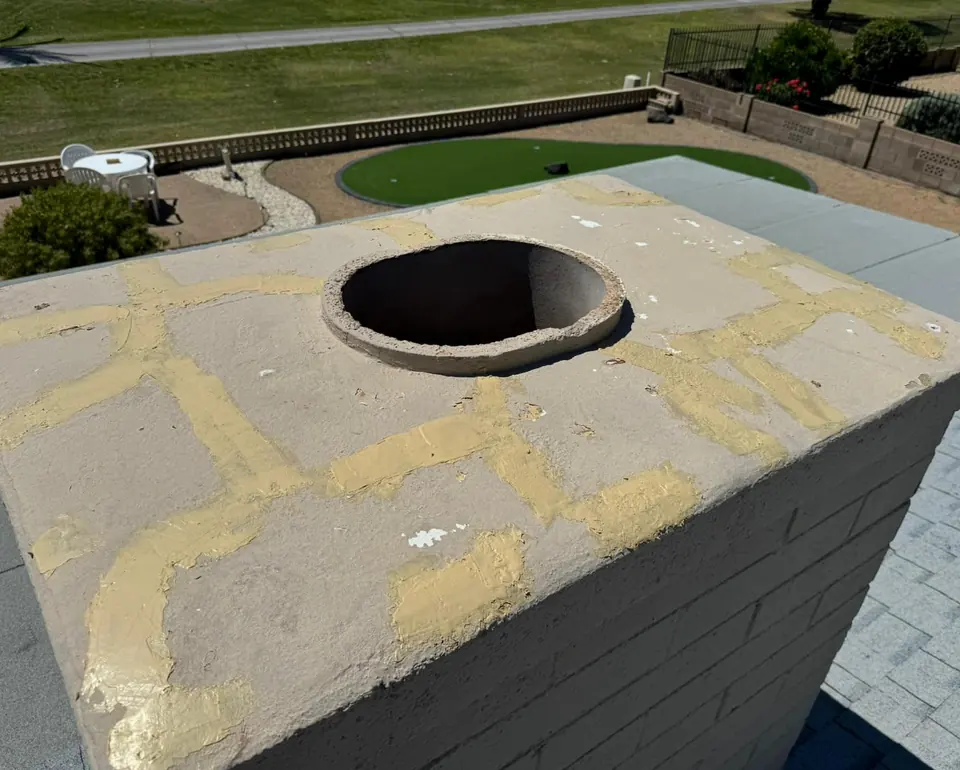
Cracked bricks, deteriorated mortar joints, a damaged crown, or water stains around the chimney need the right repair for the affected surface. A cosmetic patch can cover a symptom without addressing where water is entering.
Chimney specialist for the liner and firebox
The liner carries combustion products out of the home, while the firebox contains the fire. Damage to either is not a general patching job; have the affected area assessed before using the fireplace.
Inspection before repair when the cause is unclear
Smoke problems, recurring leaks, or damage you cannot locate may have more than one cause.
Chimney Damage That Calls for a Specialist
Look for these clues from inside the home or from the ground. Do not climb onto the roof or reach into the flue to investigate.
- Cracked or missing masonry — Gaps in bricks or mortar, loose pieces, and crumbling material can point to deterioration that needs a masonry repair rather than surface paint or filler.
- Water around the chimney — Damp patches, staining, or a musty smell near the fireplace can indicate a leak. The entry point may involve the crown, cap, flashing, or another part of the chimney.
- Smoke that spills into the room — Smoke entering the living space is a sign to stop using the fireplace and get the chimney and venting checked. Do not try to correct the draft by changing or blocking chimney parts.
- Visible damage inside the firebox — Cracked panels, loose brick, or damaged joints in the firebox affect the area that contains the fire. Leave repairs to someone who works on fireplace and chimney systems.
- A damaged or missing liner — A liner problem is not reliably judged from the fireplace opening alone. Have the chimney assessed before lighting another fire if you see damage or suspect a liner defect.
Need help now? (443) 659-7036
What to Do Before Anyone Repairs the Chimney
These steps help you describe the problem without putting yourself on the roof or disturbing damaged parts.
- Stop using the fireplace if you see damage — Do not light another fire when smoke is entering the room, masonry is loose, or the firebox appears damaged. Keep people away from loose pieces and wait for the chimney to be assessed.
- Note where the problem appears — Write down whether you noticed smoke, a leak, crumbling mortar, or damage inside the firebox, and where it appears. The location helps distinguish a visible symptom from the part that may need repair.
- Take photos from a safe place — Photograph visible damage from inside the home or from the ground. Do not climb a ladder or roof to get a closer view of the cap, crown, or flashing.
- Identify which appliance you use — Tell the service provider whether the chimney serves a wood-burning fireplace, a gas fireplace, or another appliance. The appliance and venting setup affect which parts need checking.
- Gather any repair or inspection records — Share prior notes, photographs, or repair details if you have them. This can help the technician understand whether the issue is new, recurring, or connected to earlier work.
- Arrange a chimney-focused assessment — Book a chimney repair visit or inspection rather than asking for a generic patch. We offer chimney repair and inspection services; contact us to arrange service.
- Check the repair scope before relighting — Ask which component was repaired and whether the chimney is ready for use. Do not assume that a sealed crack or replaced piece means other affected parts have also been checked.
Why a Quick Chimney Patch Can Miss the Real Problem
Chimney components work together, so the visible mark may not identify the source. For example, water staining near the fireplace can be caused by an opening higher on the chimney, while smoke entering a room can involve the firebox, flue, or venting conditions. Sealing only the most obvious spot may leave the cause untouched.
The material and location matter, too. A product meant for ordinary masonry may not be suitable for a surface exposed to high heat, and mortar repair does not fix a damaged liner.
What a Chimney Repair Visit Should Establish
A useful repair visit identifies the damaged part, the visible extent of the problem, and whether related areas need inspection. Depending on the issue, the work may involve chimney masonry, a crown, flashing, a cap, a liner, or the firebox. Ask which part is being repaired and what signs support that scope.
There is no single visit length for every repair. Access and scope make a difference: assessing a visible exterior problem is different from work involving masonry or a liner. When booking, describe the damage and ask how much time to set aside and whether the repair can be completed during the same visit.
For chimney safety, the Chimney Safety Institute of America’s homeowner resources summarize annual inspection guidance and provide information about chimney care. An inspection is especially useful when you cannot tell whether a symptom is a surface problem or damage inside the chimney.
Need help now? (443) 659-7036
When to Get the Chimney Checked and What Affects Repair Cost
Arrange an assessment when you notice a leak, loose masonry, smoke entering the room, or damage to the firebox or liner. The right repair depends on the affected component and the extent of damage, so the chimney needs to be evaluated before anyone can identify the appropriate work. Same-day service is available.
Chimney repair pricing varies with the type and extent of the damage. Our published prices cover services such as chimney sweeping, inspection, and cap installation, but not one fixed price for every repair. For more context on repair costs, see what affects the average cost to repair a chimney.
Before You Use the Fireplace Again
Do not relight the fireplace just because a visible crack has been filled or a leak has temporarily stopped. Confirm that the damaged component was addressed and ask whether the chimney is ready for use, especially when the problem involved the flue, liner, or firebox.
If the repair uncovers damage beyond the first visible spot, get the revised scope before work continues. A clear explanation of the affected parts helps you distinguish a completed repair from a cosmetic cover-up and gives you a practical record for future inspections.
Frequently asked questions
Can a handyman fix a chimney leak?
A leak can come from the chimney crown, cap, flashing, masonry, or another opening, so the visible stain may not reveal the source. Have the chimney assessed before applying a patch, particularly if water is reaching the fireplace or nearby interior surfaces.
How long does a chimney repair visit take?
Time depends on access and repair scope: a visible cap or flashing issue differs from liner or masonry work.
What does a chimney repair cost?
The cost depends on the damaged component and how much work it needs, so there is not one price for every chimney repair. Review our guide to what affects chimney repair costs for more detail.
Should I use the fireplace while waiting for a repair?
Do not use it if you see loose masonry, firebox or liner damage, or smoke entering the room. Keep it out of service until the affected chimney parts have been assessed and you know it is ready to use.
Get the Chimney Assessed
Call (443) 659-7036 or contact us to arrange chimney repair or inspection.