
What Is the Difference Between Creosote and Soot?
Creosote is a combustible deposit formed by wood smoke, while soot is the loose, dark residue left by incomplete combustion. Creosote can harden or glaze inside a flue, so don’t treat every black deposit as ordinary dust.
Need help now? (443) 659-7036
Creosote vs. Soot: The Key Difference Is How the Deposit Forms
Soot is a fine, powdery residue created when fuel does not burn completely. It can collect in a firebox and chimney, and some soot may brush away easily. Creosote forms when smoke cools as it travels through the flue and its compounds condense on the inner surface. Each pass of smoke can add to that deposit.
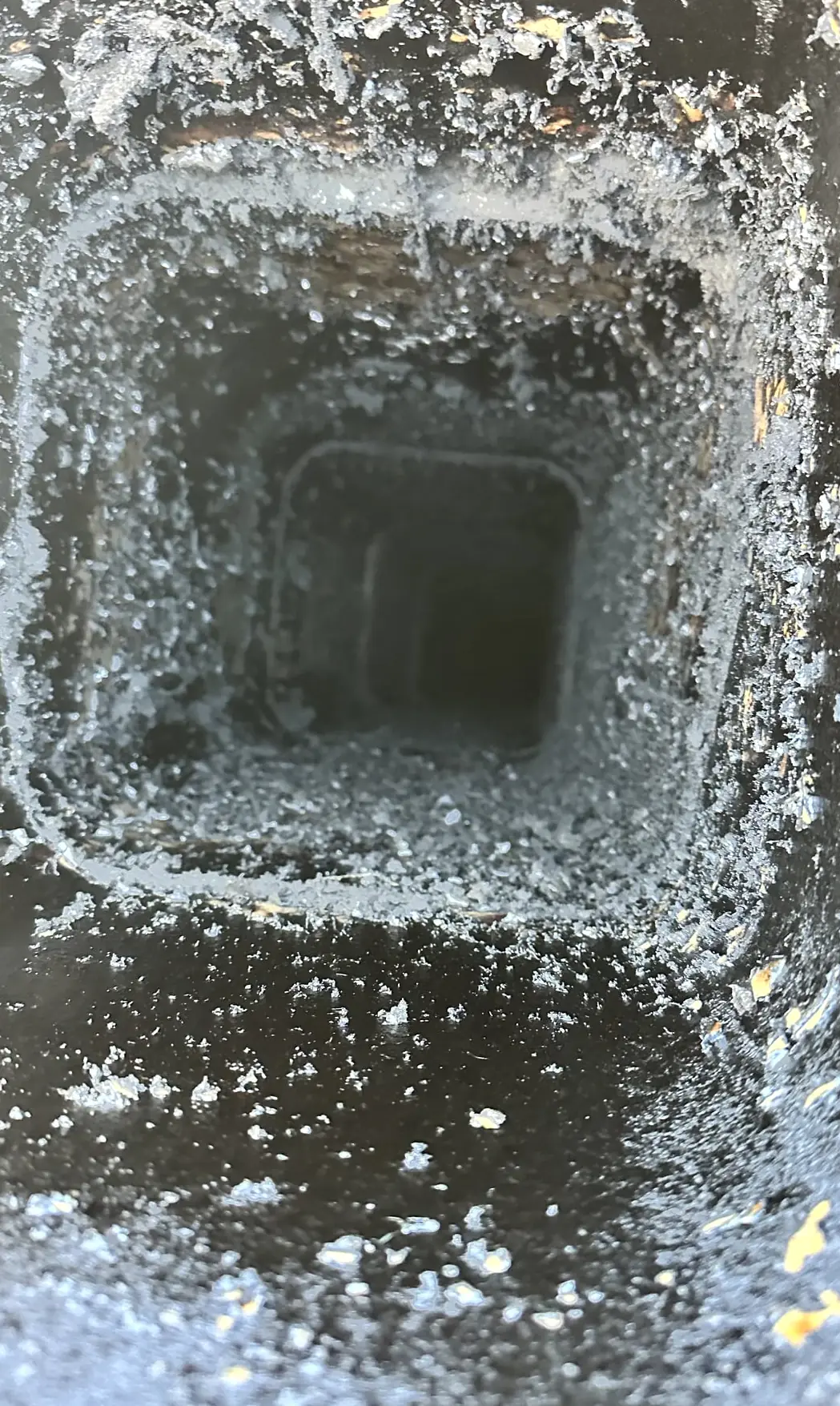
Creosote is a particular concern because it can ignite. It may appear as loose flakes, sticky tar-like material, or a hard, shiny glaze. A dark surface alone does not tell you whether you are seeing soot or creosote; texture and location matter, and the flue may need a closer inspection. For more visual clues, see what creosote looks like in a chimney.
The Chimney Safety Institute of America describes how creosote forms and why it can create a fire hazard in its chimney fire prevention guidance. If you see a hard, shiny coating or heavy tar-like buildup, stop using the fireplace until a chimney sweep checks it.
These Clues Can Help You Tell Soot From Creosote
A look from the firebox can offer clues, but it cannot show the full length or condition of a chimney flue. Don’t climb onto the roof or scrape deposits to identify them; leave close inspection and removal to a chimney professional.
- Loose, powdery black residue — This is more consistent with soot. It can collect around the firebox and smoke path, but its presence still does not prove that the flue is clear of creosote.
- Flaky, brittle coating — Creosote can form as flakes that cling to the flue lining. Flakes may look removable, but scraping at them can dislodge material without showing how much remains farther up the chimney.
- Sticky or tar-like material — A tacky, dark deposit can indicate a more concentrated creosote buildup. Avoid fires and arrange an assessment rather than trying to soften or burn it away.
- Hard, shiny glaze — A glossy, hardened layer is a serious sign that ordinary loose soot is not the whole issue. A chimney sweep should assess the flue and determine the appropriate removal approach.
- A strong smoke odor or smoke entering the room — These problems do not identify a deposit by themselves, but they can signal a venting or chimney issue. Stop using the fireplace if smoke spills into the home and have the system checked.
Creosote Needs Professional Removal; Loose Soot Still Needs Context
The difference is not simply that one deposit is black and the other is black. The right next step depends on the kind of residue, where it sits, and whether it blocks or damages the flue.
Loose soot: assess the whole smoke path
A small amount of loose residue does not rule out a deeper creosote layer. A chimney sweep can check the flue rather than relying only on what is visible in the firebox.
Flaky creosote: arrange a sweep
Flaky buildup can cling to the flue and accumulate beyond the area you can see. Have a sweep determine whether it can be removed with appropriate chimney-cleaning tools.
Glazed or tar-like creosote: stop using the fireplace
This type of deposit can be difficult to remove and may require a method suited to the flue and buildup. Don’t burn hotter, use chemicals, or scrape it yourself; a professional needs to assess the chimney first.
Smoke or suspected damage: request an inspection
A smoky fireplace or signs of a possible chimney fire call for more than a guess based on residue color. Ask for a chimney inspection before lighting another fire.
Need help now? (443) 659-7036
Use This Safe Check Before Deciding What the Fireplace Needs
These steps help you decide what to do without disturbing the flue deposit. They are not a substitute for an inspection or professional creosote removal.
- Let the fireplace and ashes cool — Do not reach into a warm firebox or handle hot ash. Wait until the fireplace is fully cool before looking for visible residue.
- Look from the firebox, not the roof — Use a flashlight to view the visible firebox and opening of the smoke path. Do not climb onto the roof or put your head or tools inside the flue.
- Note the deposit’s texture — Record whether the visible material looks powdery, flaky, sticky, or glossy. Texture can help a sweep understand the concern, but it does not establish the condition of the entire chimney.
- Check for smoke or an unusual odor — Notice whether smoke has entered the room or a strong smoke smell remains when the fireplace is not in use. Stop using the fireplace while you arrange an assessment if either occurs.
- Do not scrape, burn, or apply chemicals — A wire brush, household cleaner, or hotter fire is not a safe way to identify or remove unknown buildup. These actions can damage components or leave hidden deposits in place.
- Tell the sweep what you observed — Share the deposit’s appearance, where you saw it, and any smoke or odor problem.
- Arrange professional assessment and removal — A sweep can inspect the chimney and determine whether creosote is present and what removal method fits the flue. Explore our creosote removal service when buildup is the concern.
- Confirm the chimney is ready before relighting — Ask the sweep whether the work is complete and whether the flue needs repair or further inspection. Do not resume using the fireplace until the condition that caused the concern has been addressed.
Creosote Removal Starts With Identifying the Deposit and Flue
Creosote removal is not one universal brushing job. The deposit can be loose, flaky, sticky, or hardened, and the chimney’s construction and condition affect what approach is appropriate. A sweep assesses the situation before choosing how to remove the material.
Avoid trying to burn creosote out with a hotter fire. Creosote can ignite, and a chimney fire can damage masonry or a factory-built chimney. Chemical products and scraping tools also do not replace a proper assessment of the flue. The CSIA’s homeowner resources cover chimney maintenance and cleaning questions.
When you book, describe what you can see and any smoke or odor symptoms. Maryland Chimney Sweeps offers creosote removal; the work needed depends on the deposit and the chimney findings. You can also read how much creosote removal costs for a separate discussion of pricing.
Trying to Remove Creosote Yourself Can Leave the Hazard Behind
Brushing only the visible area can leave deposits higher in the flue. Scraping at a glazed layer may not remove it completely, while forceful tools or the wrong method can harm chimney components. A cleaner-looking firebox is not proof that the chimney is safe to use.
Do not use a fireplace if you suspect a chimney fire, see damage, or experience smoke spilling indoors. Get everyone out of the home and call 911 if there is an active fire or immediate danger. For suspected past fire damage, have the chimney assessed before using it again; heat can damage parts of the chimney that are not visible from the room.
Need help now? (443) 659-7036
Book a Creosote Assessment Before the Next Fire
When you contact a sweep, describe whether the residue is powdery, flaky, sticky, or glazed, and mention any smoke entering the room. Maryland Chimney Sweeps serves Maryland from its Baltimore base, offers same-day service, and is open 24 hours a day, 7 days a week. The visit length depends on the chimney’s condition and the work required, so ask when booking what to expect for your specific situation.
A sweep can assess the flue and determine whether creosote removal, cleaning, or further inspection is appropriate. Use the contact page to arrange service, or learn about a chimney sweep in Baltimore.
Frequently asked questions
What is creosote, and how is it different from soot?
Creosote forms when compounds in wood smoke cool and condense inside the chimney flue. Soot is loose residue from incomplete combustion; creosote can become flaky, sticky, or hard and glazed, and it can ignite.
How do you remove creosote from a chimney?
A chimney sweep first assesses the buildup and flue, then selects a removal approach suited to the deposit and chimney condition. Don’t scrape, apply chemicals, or try to burn creosote away yourself.
What affects chimney creosote removal cost?
The work depends on the type and amount of buildup and the condition of the flue, so the specific service needed matters. See our guide to creosote removal cost for more pricing information.
Can I keep using my fireplace if I see creosote?
Stop using the fireplace if you see sticky or glazed buildup, smoke spills into the room, or you suspect a chimney fire. Have a sweep assess the chimney before lighting another fire.
Concerned About Creosote?
Describe the buildup you’ve seen and arrange a chimney assessment through our contact page.