
What Does a Chimney Sweep Do During a Visit?
A chimney sweep removes soot and creosote and checks accessible fireplace and flue parts—the practical answer to “what does a chimney sweep do?” The visit can also reveal when you need a separate, more detailed inspection or repair.
Need help now? (443) 659-7036
What Does a Chimney Sweep Do Beyond Brushing the Firebox?
A chimney sweep cleans soot and creosote from the areas of the chimney that can be reached and assessed as part of the service. The sweep also looks at accessible fireplace and flue components for visible buildup or damage, then points out conditions that may need a closer inspection or repair.
Sweeping and inspection are related, but they are not the same job. A sweep focuses on cleaning; an inspection assesses the chimney’s condition and use. The chimney sweep service is the relevant booking when you need cleaning, while a chimney inspection may fit when you need a more detailed condition check.
Which Chimney Service Fits the Problem You See?
Choose the service based on the problem you need addressed, not just on the appearance of the firebox. A sweep can identify visible concerns, but cleaning does not repair damaged masonry, a faulty damper, or a compromised flue.
Chimney sweep
Choose sweeping when you want soot and creosote removed from the chimney. It is a cleaning service, not a substitute for a detailed inspection of concealed or inaccessible areas.
Chimney inspection
Choose an inspection when you need the chimney’s condition assessed, such as after a change to the appliance or after a fire or weather event. CSIA’s Level 2 inspection procedure calls for a video scan in the situations it covers.
Repair or targeted cleaning
Ask about a separate service when you see a leak, damaged brickwork, a loose chimney cap, persistent smoke, or a fireplace component that does not work. Cleaning alone will not correct a structural or operating problem.
What Happens During a Chimney Sweep, Step by Step?
The exact work depends on the fireplace, the chimney’s condition, and what the sweep can safely access. A careful visit follows a sequence that keeps the cleaning focused and helps distinguish removable deposits from damage that needs another service.
- Review the fireplace and its use — The sweep asks about the appliance and any concerns, such as smoke entering the room or a change in performance.
- Look over the firebox and damper — The sweep checks visible firebox surfaces and the damper area for buildup or obvious damage. A damper that will not open or close properly should be reported rather than forced.
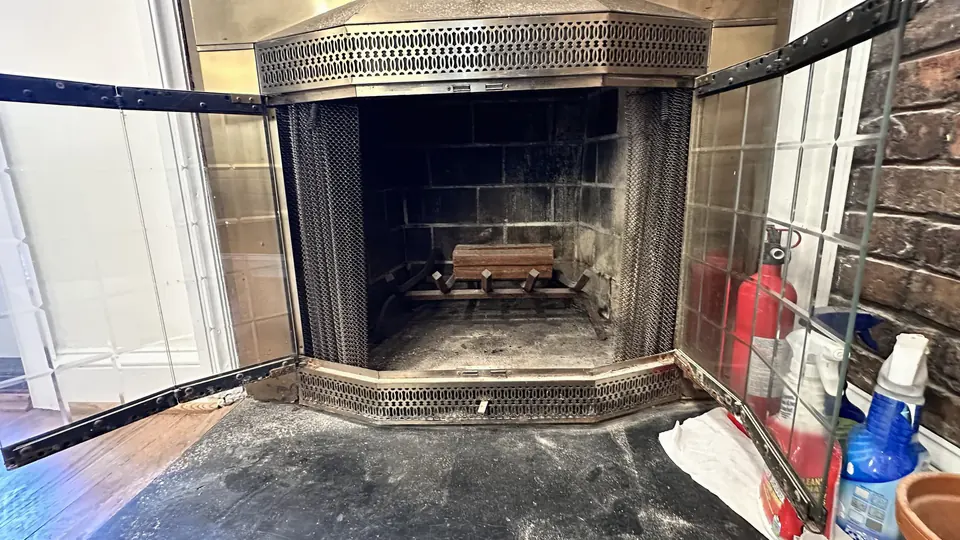
- Protect the work area — A drop cloth and appropriate dust-control setup help contain debris around the fireplace. The sweep should check that the area is protected before brushing begins.
- Access the flue — The sweep opens the route into the chimney through an appropriate access point. The opening and the visible flue surface are checked for obstructions and deposits.
- Brush the chimney — A chimney brush with extension rods loosens soot and creosote from reachable flue surfaces. The brush should fit the flue being cleaned; the sweep checks whether deposits are coming free or remain attached.
- Collect loosened debris — A vacuum or other collection method captures debris loosened during brushing. The firebox and protected work area are checked for escaped dust as cleaning proceeds.
- Recheck accessible components — After cleaning, the sweep checks the accessible firebox, damper area, and flue opening again. This can make visible cracks, obstructions, or damage easier to notice.
- Report findings and next steps — The sweep summarizes what was cleaned and identifies visible conditions that call for inspection or repair. Ask which observation led to a recommendation and whether the proposed work is separate from sweeping.
Need help now? (443) 659-7036
How Long Does a Chimney Sweep Visit Take?
The visit’s duration depends on the amount and type of buildup, access to the chimney, and whether the sweep finds a condition that needs additional assessment. A straightforward cleaning and a visit that uncovers an obstruction or visible damage do not involve the same amount of work, so the scope matters more than a single time estimate.
When booking, describe the fireplace or stove, when it was last cleaned if you know, and any symptoms you have noticed. Ask whether you are booking a sweep, an inspection, or both; that distinction helps set the work scope before the visit.
Which Chimney Signs Mean It Is Time to Call a Sweep?
Stop using a fireplace that is smoking into the room or showing signs of damage until the cause is assessed. These signs can point to different issues, so share exactly what you observed when arranging service.
- Soot or flaky deposits — Visible deposits around the firebox or flue opening can indicate that material has accumulated inside the chimney. A sweep can assess whether cleaning is appropriate and whether the deposits extend beyond accessible areas.
- Smoke entering the room — Smoke that spills indoors is not a routine cleaning symptom to ignore. Do not keep using the fireplace to test it; arrange an assessment to check the damper, flue, and other possible causes.
- A blocked or unusual flue — A visible obstruction, animal activity, or a sudden change in draft needs attention before the fireplace is used again. A sweep can identify whether cleaning or a separate service is needed.
- Cracks, leaks, or damaged masonry — These signs point toward inspection or repair rather than sweeping alone. Mention where you noticed the problem and whether it appeared after weather damage or a chimney event.
What Can You Do Before the Sweep Arrives?
Let the fireplace cool completely and move nearby objects that could block access to the hearth. Keep children and pets away from the work area, and do not try to scrape deposits from inside the flue yourself; disturbing soot or creosote can spread debris and will not show whether the chimney is safe to use.
Make a short note of smoke problems, odors, water entry, noises, or changes in fireplace operation. Tell the sweep whether the system is wood-burning or gas, and mention any work or damage you already know about. That context helps the sweep focus the visit and flag when cleaning alone is not the right next step.
Need help now? (443) 659-7036
What Can Chimney Sweeping Miss?
Cleaning removes deposits; it does not prove that every part of the chimney is undamaged. A routine sweep may not provide the visual access needed to assess concealed flue surfaces, and a brush cannot repair cracks, a leaking crown, damaged masonry, or a faulty damper.
CSIA describes situations where a Level 2 inspection is recommended, including an appliance change, a property sale, relining, or a fire or weather event; its procedure includes a video scan. Read the Level 2 inspection procedure if one of those situations applies. Ask for an inspection when the concern is the chimney’s condition, not just its cleanliness.
How Do You Book a Chimney Sweep Visit?
Use the contact page to arrange a visit at your home. Share the appliance type, the symptoms you have noticed, and whether you want cleaning, an inspection, or both; same-day service is available.
After the visit, ask what was cleaned, what the sweep observed, and whether any recommendation is for a separate inspection or repair. CSIA’s homeowner resources explain the NFPA 211 recommendation for annual chimney inspection and discuss creosote buildup, which can help you understand why cleaning and inspection serve different purposes.
Frequently asked questions
What does a chimney sweep include?
A sweep removes soot and creosote from accessible areas and checks visible fireplace and flue components for concerns. A more detailed inspection or any repair may be a separate service, so ask what work is included in your booking.
How long does a chimney sweep take?
The duration depends on buildup, access, and whether the sweep finds a concern that needs more assessment.
Do chimney sweeps make a mess?
Brushing loosens soot and creosote, so dust control and protection around the fireplace matter. A professional sweep should protect the work area and collect debris during cleaning; mention delicate furnishings or limited hearth access when arranging the visit.
Should I book a sweep or a chimney inspection?
Book a sweep when the main need is removing deposits; book an inspection when you need the chimney’s condition assessed. After a fire or weather event, appliance change, sale, or relining, ask whether a Level 2 inspection is appropriate.
Arrange Your Chimney Sweep
Share what your fireplace is doing and book a chimney sweep visit at home.