
How Much Does Creosote Removal Cost?
Our listed starting prices are $89 for a chimney sweep and $89 for chimney cleaning; creosote removal is a service we provide. The right service depends on what has collected inside the flue and what the chimney needs.
Our Starting Prices in Baltimore
| Service | Price |
|---|---|
| Chimney sweep | from $89 |
| Chimney cleaning | from $89 |
| Chimney inspection | from $39 |
| Chimney cap installation | from $250 |
| Chimney liner installation | from $899 |
| Gas fireplace service | from $49 |
Need help now? (443) 659-7036
What Creosote Removal Cost Starts From
The starting prices give you a useful first comparison: a chimney sweep starts at $89, and chimney cleaning also starts at $89. Those are separate service listings, not a promise that every chimney has the same needs or scope of work.
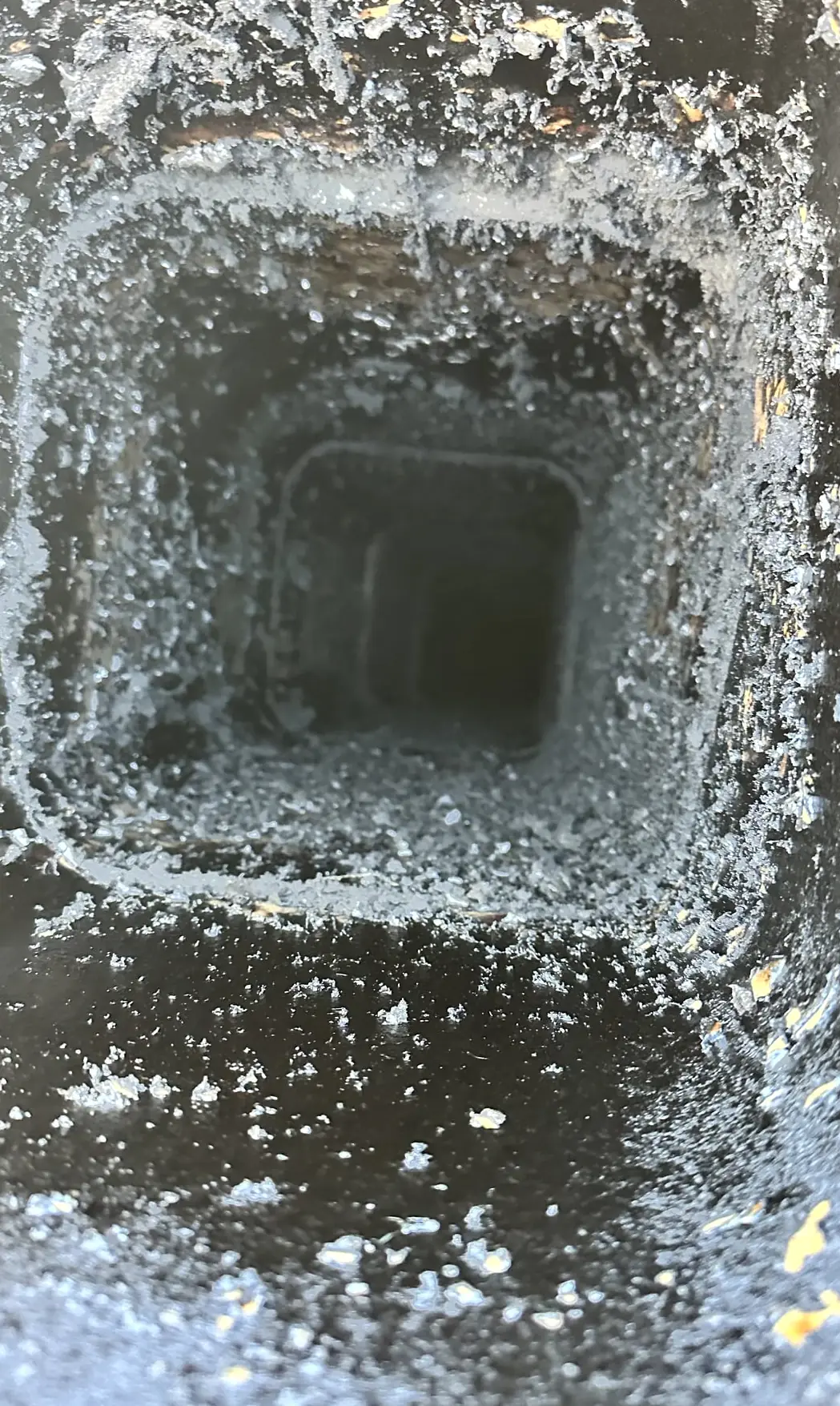
Creosote forms when smoke cools and condenses inside a chimney. How much has accumulated and whether it is a loose, flaky deposit or a harder glazed layer affect the work needed. The Chimney Safety Institute of America (CSIA) explains creosote formation and removal in its homeowner resources.
A chimney inspection starts from $39. It can help clarify the condition of the flue when you are unsure whether the issue is creosote, another deposit, or a chimney problem that needs attention.
What Changes the Work Needed for Creosote
The amount of buildup is only part of the decision. Avoid trying to judge the flue by looking only into the firebox.
- How much buildup is present — A small amount of loose residue and heavy deposits are not the same cleaning task. CSIA identifies creosote accumulation of 1/8 inch or more as a reason to have the chimney swept.
- What the deposit looks like — Black, shiny, or hardened material can point to a more difficult deposit than loose soot. You can compare visible signs in our guide to what creosote looks like in a chimney, but a view from the fireplace does not show the full flue.
- Whether the chimney needs inspection — A sweep addresses deposits; an inspection checks the chimney’s condition. If you have had a chimney fire, a change in appliance, or other concern about damage, ask about inspection rather than treating cleaning alone as a full condition check.
- Whether the fireplace is producing smoke — Smoke entering the room is a sign to stop using the fireplace until the cause is assessed. Creosote may be part of the problem, but the chimney or venting also needs attention.
Which Starting Price Fits Your Creosote Situation
These examples connect common decisions to our listed starting prices. They are not a diagnosis; the chimney’s condition determines which service fits.
You want routine fireplace and flue cleaning
A chimney sweep starts from $89. This is the starting point to ask about when your main concern is soot or creosote left by fireplace use.
You specifically need chimney cleaning
Chimney cleaning starts from $89. Share whether you see loose or shiny deposits and whether smoke has spilled into the room so the service request reflects the problem you noticed.
You are not sure what the buildup means
A chimney inspection starts from $39.
Need help now? (443) 659-7036
How to Prepare for a Creosote Assessment
Keep the inspection and removal work to a chimney professional. These owner-level steps help you describe the concern without climbing onto the roof, reaching into the flue, or trying to scrape deposits yourself.
- Let the fireplace cool — Do not inspect or photograph an active fire. Wait until the fireplace and ash are fully cool, then check that no embers remain before approaching the firebox.
- Use a flashlight from the room — Shine a flashlight into the firebox without putting your head or hands inside the chimney. Note whether you can see loose dark residue or a shiny coating, but do not treat that limited view as a full flue inspection.
- Take a clear photo — Use a phone camera to record what is visible from a safe position. Check that the photo shows the area you are concerned about; do not climb onto the roof or lean into the fireplace to get a closer image.
- Check the damper position — From the fireplace opening, note whether the damper appears open, closed, or stuck. Do not force a jammed damper, and tell the sweep what you observed.
- Write down changes in fireplace performance — Record when you noticed smoke entering the room, a stronger odor, or a change in how the fireplace draws. Check your notes against recent use so you can describe when the symptom happens.
- Keep the fireplace out of use if smoke spills indoors — Do not light another fire while smoke is coming into the home. Check that the fire is out and arrange for a chimney sweep to assess the cause before using the fireplace again.
- Share the concern when booking — Check that you have the address and a safe way for the technician to access the fireplace area.
What a Creosote Removal Visit Should Address
Creosote removal means addressing deposits inside the chimney, not just brushing the visible firebox. The work should account for the flue and the type of buildup; a quick look at the hearth cannot establish that the whole passage is clean.
Ask for the service that matches the problem: creosote removal service for deposits, a chimney sweep or cleaning for routine residue, and an inspection when you need the chimney’s condition checked. A sweep can also tell you when the signs point to repair rather than cleaning alone.
Do not burn a fire to test a chimney that has smoky operation, a suspected blockage, or signs of possible fire damage. CSIA recommends a Level 2 inspection after events such as a chimney fire or a change in appliance; its Level 2 inspection procedure describes when a video scan is required.
When Creosote Calls for a Chimney Sweep
Contact a chimney sweep when you see thick or shiny black deposits, when smoke enters the room, or when you suspect a chimney fire or damage. Do not scrape hardened material yourself: reaching into the flue or using tools from the roof can expose you to a fall and can leave hidden areas unchecked.
A chimney fire can damage masonry or a factory-built chimney, even when the damage is not obvious from the fireplace. Stop using the fireplace if you suspect one and arrange an assessment before lighting another fire. For guidance on deposit signs, see what is the difference between creosote and soot?.
Need help now? (443) 659-7036
How to Book Creosote Removal in Maryland
Maryland Chimney Sweeps serves the state from its Baltimore base, including Baltimore and its suburbs, Annapolis, Frederick, Montgomery County, the Eastern Shore, and Western Maryland. The owner, Darren Whitaker, has 22 years of experience with chimneys and fireplaces.
To book, call (443) 659-7036 or use our contact page.
For a broader comparison of service starting prices, see our prices. We speak Spanish: Hablamos español.
Frequently asked questions
What is the cost of having your chimney swept?
Our chimney sweep starts from $89.
Does chimney sweep service cost include creosote removal?
Creosote removal is one of the services we provide, and chimney sweep starts from $89.
Should I choose a chimney inspection or cleaning for creosote?
Choose cleaning when the concern is deposits; choose an inspection when you need the chimney’s condition assessed or have noticed a possible problem. A chimney inspection starts from $39, and cleaning starts from $89.
Can I use my fireplace if I see shiny black creosote?
Do not use the fireplace until a chimney sweep has assessed shiny or hardened deposits. Creosote buildup can be difficult to remove, and smoke entering the room is another reason to stop using the fireplace.
Get Creosote Assessed
Call (443) 659-7036 or contact Maryland Chimney Sweeps to book a chimney service.