
Can a Chimney Liner Be Repaired?
Yes, a chimney liner can sometimes be repaired when the damage is limited and the remaining liner is sound; more extensive damage may need a new liner. Our chimney liner repair service starts by assessing the liner and venting path.
Need help now? (443) 659-7036
Can a Chimney Liner Be Repaired Without Replacing It?
A chimney liner may be repairable when a defect is limited and the surrounding liner remains in serviceable condition. Cracks, gaps, or deterioration across a larger area can point to a need for relining or replacement instead. The right answer depends on the liner’s condition and whether it can safely vent the connected fireplace or appliance.
A repair should address the cause and extent of the damage, not just hide a visible mark. A chimney professional can inspect the liner and determine whether a localized repair is appropriate or whether a new liner is needed. For details about the service, see our chimney liner repair service.
- Localized damage — A limited defect may leave the rest of the liner usable. An inspection helps establish whether the affected area can be repaired without leaving other damage in place.
- Damage across the liner — Widespread cracking, separation, or deterioration may make a local fix inadequate.
- Liner does not suit the appliance — A change to the fireplace or heating appliance can affect the liner requirements. The CSIA recommends a Level 2 inspection when relining is being considered; that inspection includes a video scan of the flue.
Which Chimney Liner Signs Need an Inspection?
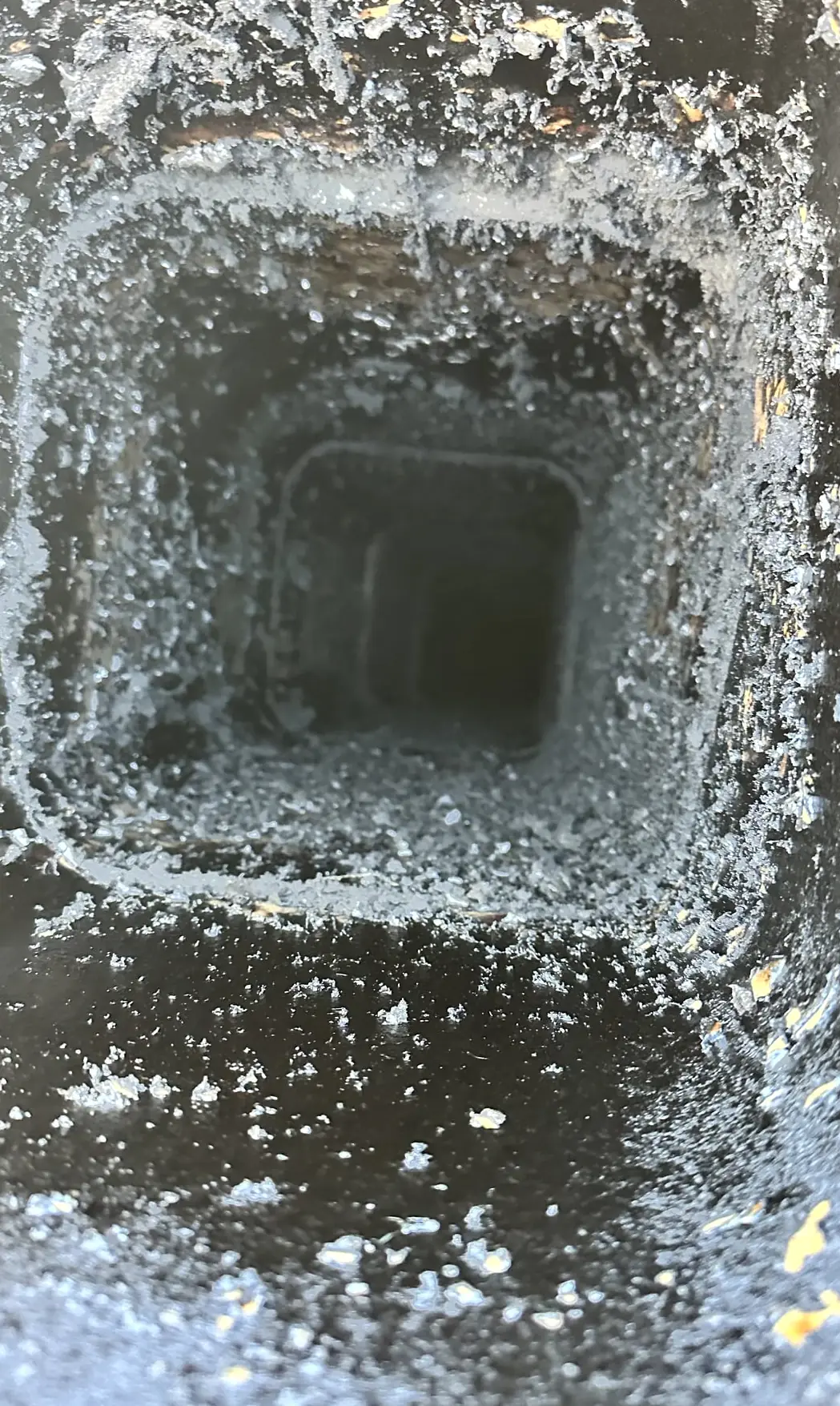
Visible damage is a reason to arrange an inspection, but you may not be able to see the full flue from the fireplace opening. Do not treat a clean-looking firebox as proof that the liner is intact.
- Cracks or gaps — These can indicate damage to the liner or a separation between sections. A professional needs to check how far the defect extends.
- Loose or fallen material — Fragments inside the fireplace or firebox may have come from masonry or the liner. Leave them in place for the inspection if they are safe to access without reaching into the flue.
- A recent chimney fire or weather event — Damage may not be obvious from below after a fire or severe weather. CSIA guidance identifies these events as reasons to consider a Level 2 inspection.
- A planned appliance change or relining — These changes affect the venting system, so an inspection can help identify whether the existing liner is suitable or needs repair or replacement.
What a Chimney Liner Inspection Needs to Establish
The inspection needs to establish where the damage is, how much of the liner is affected, and whether the liner is appropriate for the appliance it serves. A visual check can reveal accessible problems, but a Level 2 inspection may be needed when relining is considered, after an appliance change, or following a fire or weather event. CSIA’s Level 2 inspection procedure specifies a video scan of the flue for that inspection.
Before the visit, note what appliance uses the chimney and whether any recent changes, smoke problems, or damage have occurred. Do not climb onto the roof or try to probe the liner yourself. Those actions can create a fall risk or disturb damaged material without showing the full condition of the flue.
Need help now? (443) 659-7036
How a Chimney Liner Repair Decision Takes Shape
A sound repair decision follows the evidence from the appliance connection through the flue. These steps describe the checks that help distinguish a limited repair from work on a larger section or a replacement liner.
- Identify the connected appliance — Tell the sweep whether the flue serves a fireplace or another appliance and whether anything has changed. The appliance context matters when assessing the liner’s role.
- Describe what you observed — Point out visible fragments, cracks, smoke issues, or a recent fire or weather event. Specific observations help focus the inspection without treating a symptom as a diagnosis.
- Check accessible areas — The chimney professional examines accessible parts of the firebox and liner for visible defects. Note where the inspection finds damage rather than assuming it is limited to the spot you can see.
- Use a video scan when required — A Level 2 inspection includes a video scan of the flue under the CSIA procedure. The camera helps inspect areas that cannot be assessed from the fireplace opening.
- Map the extent of the damage — The findings should show whether damage is localized or extends through more of the liner. Ask which sections are affected and what evidence supports that conclusion.
- Compare repair and relining — A limited defect may be a repair candidate, while broader damage or a liner mismatch may point toward relining or replacement. The recommendation should match the condition found, not just the visible symptom.
- Check the result after the work — After repair, ask what part of the liner was addressed and what was checked to confirm the work. Keep the inspection and repair details with your home records.
Which Liner Option Fits the Damage?
Repair, relining, and replacement are not interchangeable labels. The inspection determines which option addresses the actual condition of your chimney liner.
Repair
A repair may fit a limited, accessible defect when the rest of the liner remains serviceable. Ask the sweep to identify the damaged area and explain how the proposed work addresses it.
Relining
Relining is considered when the existing liner needs a new lining rather than a localized fix. Because relining is a significant change to the venting system, CSIA recommends a Level 2 inspection for that situation.
Replacement
Replacement may be appropriate when damage is extensive or the existing liner cannot serve the appliance properly. The inspection should explain why repair alone would not address the condition.
What Can Go Wrong When Liner Damage Is Ignored?
A patch that covers only what is visible can leave damage elsewhere in the flue untreated. Likewise, deciding on full replacement before checking the liner can mean choosing work that does not match the documented condition. Ask for the affected area and the reason for the recommended scope.
Avoid using a fireplace or appliance when you have reason to suspect liner damage until a chimney professional has assessed it. Do not attempt a do-it-yourself patch, reach into the flue, or climb onto the roof to inspect the liner. For routine flue care, you can also arrange a chimney sweep in Baltimore; the sweep can identify when a closer liner assessment is needed.
Need help now? (443) 659-7036
How to Arrange a Chimney Liner Assessment
When you contact Maryland Chimney Sweeps, share the appliance connected to the liner, what you noticed, and whether there has been a recent appliance change, fire, or weather event. The assessment focuses on the liner’s condition and whether repair, relining, or replacement fits what is found.
The visit includes an assessment of the chimney liner and a recommendation based on its condition; a video scan is part of a Level 2 inspection when that inspection is indicated. Same-day service is available, and we are open 24 hours a day, 7 days a week. To arrange an assessment, contact us with the details you have.
How Liner Damage Relates to Flue Repair Costs
The repair scope depends on what the inspection finds, so a visible crack alone does not establish what work is needed. A localized defect and damage that extends through the flue are different conditions and may call for different solutions. Our guide to how much cracked chimney flue repair costs covers the cost question for that related problem.
Maryland Chimney Sweeps serves homes throughout Maryland from its Baltimore base, and we speak Spanish (Hablamos español). Owner Darren Whitaker has 22 years of experience with chimneys and fireplaces. The warranty on chimney work starts from 2 years.
Frequently asked questions
Can a cracked chimney liner be repaired?
Sometimes, when the damage is limited and the rest of the liner remains serviceable. An inspection must establish how far the crack extends before a sweep can recommend repair, relining, or replacement.
Does a chimney liner always need to be replaced when it is damaged?
No. A localized defect may be repairable, while widespread damage or a liner that does not suit the connected appliance may call for relining or replacement. The inspection findings determine which option addresses the problem.
Can I inspect or patch a chimney liner myself?
Do not climb onto the roof, reach into the flue, or apply a patch to suspected liner damage. A chimney professional can inspect the flue, including a video scan as part of a Level 2 inspection when indicated.
What should I tell the chimney sweep before a liner inspection?
Share which appliance uses the flue and describe any visible damage, smoke problems, or recent fire or weather event. Mention any appliance change or planned relining, since those details can affect the inspection level.
Get Your Chimney Liner Assessed
Share what you have noticed and arrange a chimney liner assessment with Maryland Chimney Sweeps.