
What Is a Chimney Liner, and What Does It Do?
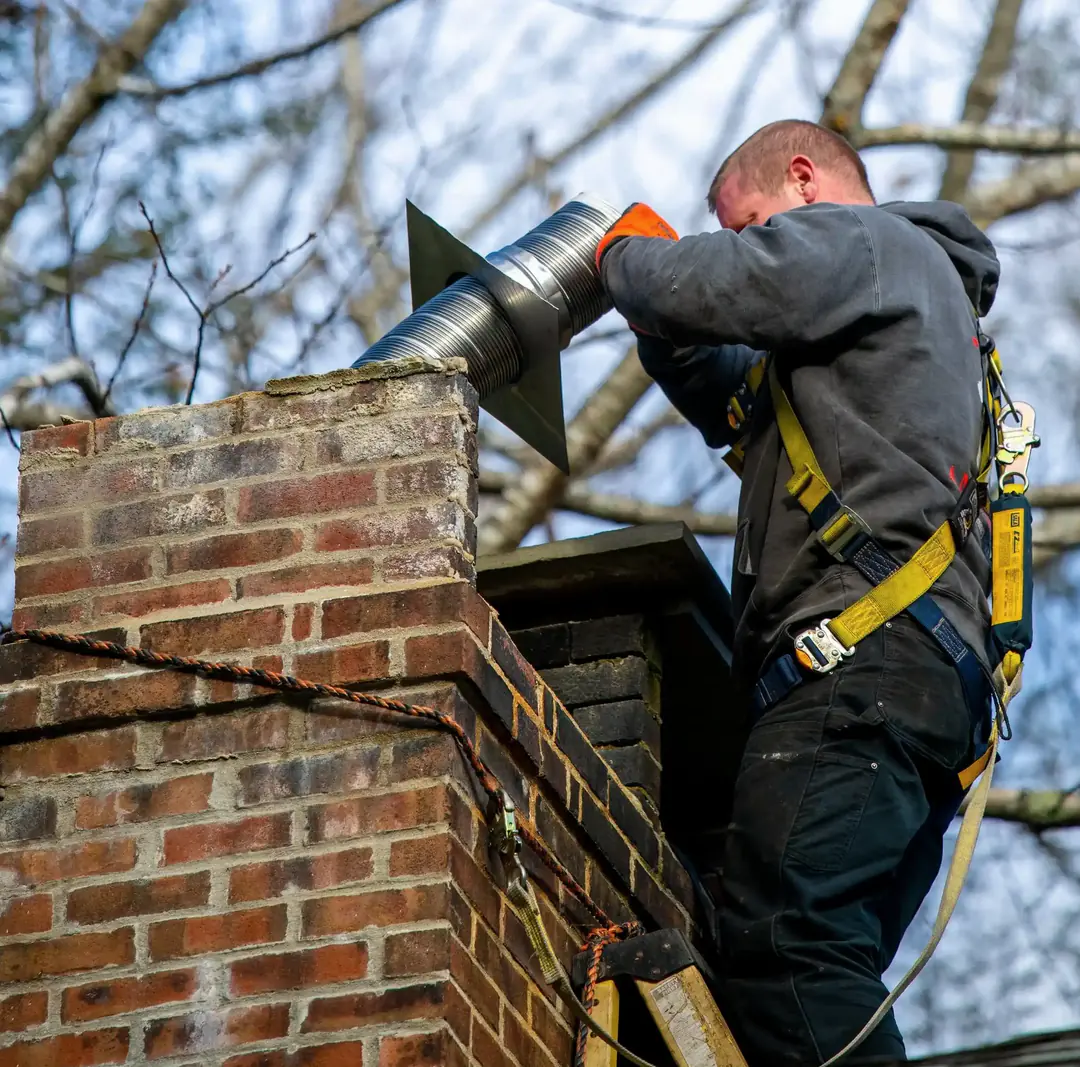
What is a chimney liner? It is the passage inside a chimney that carries smoke and combustion gases outdoors while separating them from the surrounding chimney structure. Its material and size must suit the appliance and fuel it serves.
Need help now? (443) 659-7036
What a Chimney Liner Does Inside the Flue
A liner forms the inner passage that directs smoke and combustion gases from a fireplace or heating appliance up and out of the chimney. It also separates those hot gases from nearby masonry or other chimney materials. A damaged, missing, or poorly matched liner can affect how the appliance vents and expose the chimney structure to heat and combustion byproducts.
The liner has to work with the appliance it serves, not just fit inside the chimney. Appliance type, fuel, flue dimensions, and chimney condition all matter when deciding whether an existing liner can stay or a new system is needed. For more on the underlying question, read whether a chimney liner is necessary.
Which Chimney Liner Type Fits Your Flue
Liners come in different materials and installation forms. The right choice depends on the appliance, fuel, existing flue, and the condition of the chimney; a material that suits one setup may not suit another.
Clay tile
Clay tiles are built into many masonry flues. A cracked or missing tile can leave a break in the passage, and replacing individual tiles may require work inside the chimney.
Stainless steel
A stainless steel liner can provide a new passage through an existing chimney when the current flue needs relining. Its size and specifications must match the appliance and fuel.
Cast-in-place
A cast-in-place liner forms a new lining within the existing flue. The chimney’s shape and condition affect whether this approach is suitable.
How to Decide Between Keeping, Repairing, or Replacing a Liner
A visible problem does not tell you by itself whether the whole liner needs replacement. The flue and the appliance it serves need to be assessed together before choosing a repair or a new liner.
- Keep the existing liner — This may fit when inspection finds the flue intact and appropriate for the connected appliance. Ask for the condition of the liner to be checked, not just the chimney exterior.
- Repair the liner — A localized defect may call for a repair when the rest of the liner remains suitable.
- Install a new liner — Relining may be considered when the existing passage is damaged, unsuitable for the appliance, or being changed as part of an appliance project. The new liner must be sized and specified for the setup.
- Pause use and request an assessment — Do this when you see damaged flue material, have a new appliance connected, or suspect chimney damage after a fire or severe weather. Do not climb onto the roof or reach into the flue to investigate.
Need help now? (443) 659-7036
What Happens During Chimney Liner Installation
A liner installation is a sequence of checks and fitting work, not simply sliding a tube into a chimney. These steps describe the decisions involved; a qualified professional should handle the work inside the flue and on the roof.
- Identify the connected appliance — The installer identifies the appliance and fuel so the liner system can be selected for its use. Check that the proposed liner is intended for that type of appliance and fuel.
- Examine the chimney and flue — The chimney and flue are assessed for obstructions, damage, and the route available for the liner. Note whether the inspection identifies a problem along the full flue or in a specific area.
- Check the flue dimensions — The key check is that the selected system fits the flue and serves the connected appliance.
- Select the liner system — The material and specifications are matched to the appliance, fuel, and chimney conditions. Confirm that the selection addresses the reason the existing liner cannot remain in service.
- Prepare the installation route — The installer prepares access and the flue for the selected system. The route should be clear enough for the liner to pass without damaging it or leaving an obstruction.
- Fit the liner and connections — The liner is set in place and connected to the appliance side of the venting system. Check that connections are secure and that the liner follows the intended route.
- Finish the chimney opening — The top and appliance-side transitions are finished to suit the installed system. Check that the liner is supported and that the top termination does not leave an open gap around it.
- Verify the completed installation — The installer checks the finished liner and its connections before the appliance is used. Ask what was installed and whether the original flue damage or condition affected the work.
Signs the Chimney Liner Needs Professional Attention
Cracked or missing clay tile, visible gaps, loose material in the firebox, or a change in how the appliance vents are reasons to stop and arrange an assessment. These signs do not prove that the entire liner needs replacement, but they do mean the flue needs closer examination before regular use.
A new appliance, relining project, sale of a home, chimney fire, or weather event can also call for a more detailed inspection. CSIA’s Level 2 masonry chimney inspection guidance identifies these situations and specifies a video scan for that inspection level. A camera view can reveal damage or obstructions inside the flue that you cannot assess from the fireplace opening.
How Long a Liner Visit Takes and What to Arrange
There is no single visit length for every liner job. The time depends on the chimney’s height and route, access, liner type, and whether the existing liner must be removed or the flue needs additional work. An inspection may identify conditions that change the installation scope.
Before booking, gather the appliance type and fuel, any available information about the current liner, and a short description of the problem or planned appliance change. Share whether you have noticed loose debris, visible damage, or venting changes. This gives the chimney professional useful context before examining the flue.
Maryland Chimney Sweeps offers chimney liner installation service and works throughout Maryland from its Baltimore base. For a closer look at the installation starting price, see how much chimney liner installation costs. You can contact us to arrange service; same-day service is available.
Need help now? (443) 659-7036
What to Do Before Using a Chimney With a Suspected Liner Problem
Do not try to inspect the flue by climbing onto the roof, removing chimney parts, or reaching into the passage. If you see damaged material or suspect an obstruction, avoid using the connected appliance until a chimney professional has assessed the condition.
A chimney liner installation service can address a flue that needs a new liner, while the assessment helps distinguish installation from a repair or another chimney issue. Describe what you observed and whether the appliance or chimney has recently changed; those details help focus the inspection.
Frequently asked questions
Can I use my fireplace if the chimney liner is cracked?
A crack can expose the chimney structure to heat and combustion byproducts, so do not keep using the fireplace until the flue has been assessed. A chimney professional can determine whether the damage is localized or whether the liner needs replacement.
Does every chimney liner need to be stainless steel?
No. Clay tile, stainless steel, and cast-in-place systems are different options, and the appliance, fuel, flue, and chimney condition determine what fits. The material should be selected for the specific venting setup, not by preference alone.
How long does chimney liner installation take?
The work time depends on the chimney route and height, access, liner type, and the condition of the existing flue. A chimney professional needs to assess the setup before estimating the time for that particular job.
What does chimney liner installation cost?
Chimney liner installation starts from $899. The required liner and work scope depend on the appliance and chimney; see our chimney liner installation cost guide for more detail.
Arrange a Chimney Liner Assessment
We offer same-day service and work throughout Maryland.