
What Does Creosote Look Like in a Chimney?
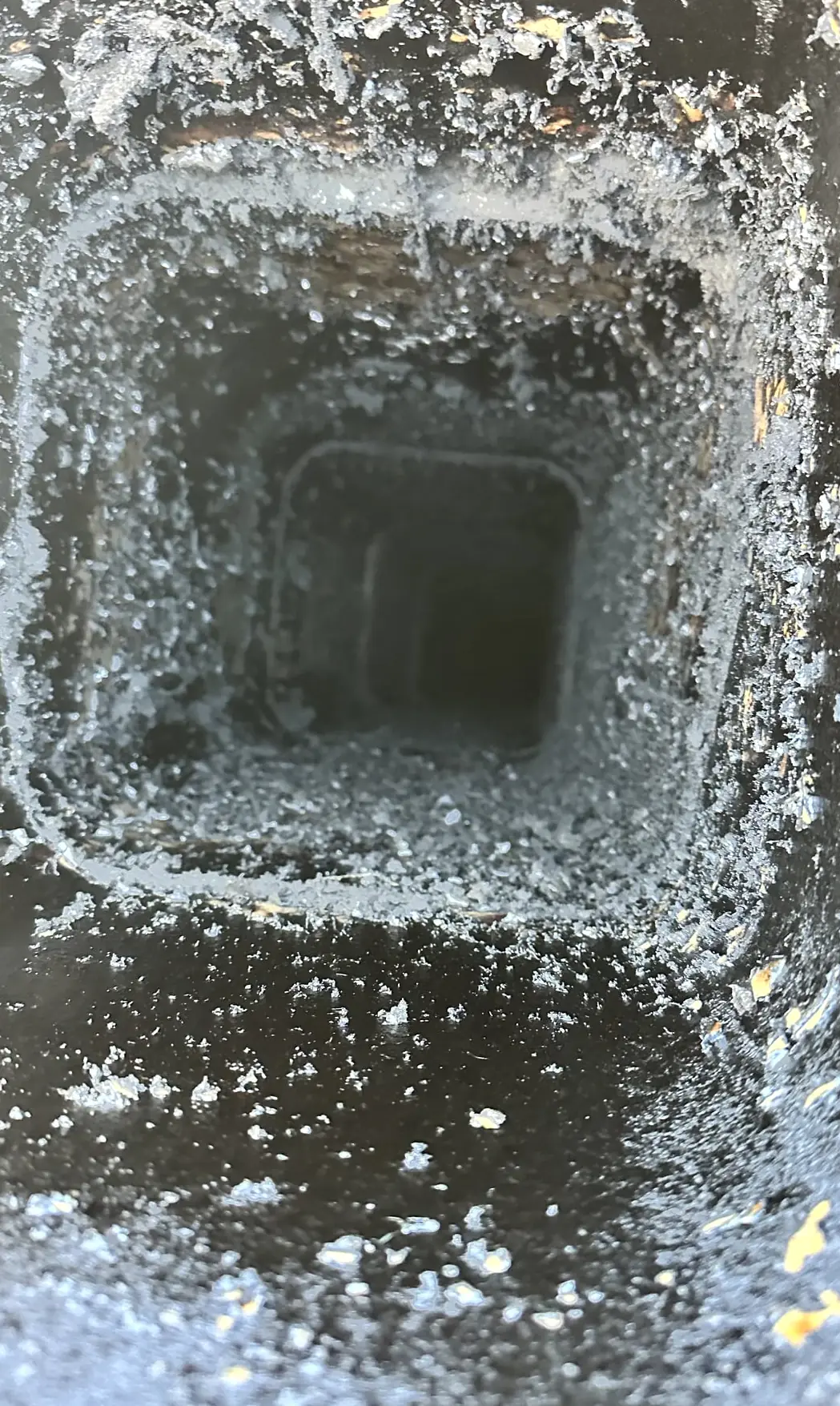
Creosote in a chimney can look like loose black or brown flakes, rough crunchy deposits, or a hard, shiny tar-like glaze. Don’t scrape inside the flue yourself; our creosote removal service can address buildup, with same-day service available.
Need help now? (443) 659-7036
What Creosote Looks Like in a Chimney at Each Stage
Creosote forms when smoke cools inside the flue and leaves deposits on its walls. Its appearance can change from loose, soot-like material to rough, hardened layers and then a shiny, tar-like glaze. The exact look depends on how much has collected and how it has formed.
A flashlight may show dark material in the firebox or just above it, but the full flue extends beyond what you can see from the hearth. A clean-looking firebox does not prove the chimney is clear. Creosote can coat areas higher in the flue, out of sight.
Which Creosote Deposit Are You Seeing?
Creosote’s texture helps describe what you see, but appearance alone cannot confirm how much is in the flue or which removal method is appropriate.
Loose flakes or powder
Dark, flaky material may resemble soot and can fall into the firebox. Don’t assume it is harmless soot just because it brushes away easily; tell the sweep where you saw it.
Rough, crunchy layers
Hard, uneven deposits cling to the flue walls and are more difficult to remove than loose material. Their thickness and extent need a closer look before deciding on treatment.
Shiny, tar-like glaze
A smooth, glossy coating is a more stubborn form of buildup. Don’t try to burn it off or scrape it from inside the chimney; ask a professional to assess the flue and removal method.
How to Check for Creosote From the Fireplace
You can note visible clues without climbing onto the roof or reaching into the flue. Keep the check visual: a homeowner’s look is not a substitute for a chimney inspection.
- Let the fireplace cool completely — Do not inspect while embers or hot ash remain. Check that the firebox is cold before you get close to it.
- Use a flashlight at the opening — Shine the light toward the throat—the area above the firebox—without putting your head or hands inside. Look for dark deposits on surfaces you can see.
- Note the texture, not just the color — Record whether the material looks powdery, flaky, rough, or glossy. Black material by itself does not tell you whether it is soot or creosote.
- Look for flakes in the firebox — Check the firebox floor and the area around the damper for fallen debris. Note where you found it, but don’t reach up or try to dislodge material.
- Take a photo from a safe position — A photo of visible buildup can help you describe what you noticed when booking. Avoid leaning into the fireplace or climbing onto the roof for a better view.
- Stop using the fireplace if buildup looks glazed — A shiny, hardened coating needs professional assessment, not a home scraping attempt. Share what you saw and arrange a chimney sweep before using the fireplace again.
Need help now? (443) 659-7036
How to Tell Creosote From Soot
Soot is a loose, dark byproduct of burning; creosote forms when smoke compounds condense and build up on the flue. The two can look similar, especially when creosote is still flaky, so color alone is not a reliable way to tell them apart.
- Loose and powdery — This may be soot or an early, flaky deposit. The texture is a clue, not a definite identification.
- Clinging, rough layers — Material that sticks to the flue and has a crunchy surface is more consistent with hardened creosote buildup.
- Smooth and glossy — A shiny, tar-like surface suggests a hardened deposit that needs professional assessment. Don’t use a household brush or chemical product to remove it.
When Visible Creosote Means It’s Time to Book Removal
Book a chimney sweep when you see flakes, crunchy deposits, or a glossy coating, or when you cannot see enough of the flue to judge its condition. A professional can examine the chimney’s accessible areas and determine whether cleaning or a more targeted creosote-removal method fits the deposit.
The amount of buildup, its texture, chimney access, and the flue’s height affect the work involved and how long a visit takes. Tell us what you saw and whether the fireplace has been used recently when you contact us. Our creosote removal service addresses deposits that need more than routine brushing.
The Chimney Safety Institute of America describes how creosote forms and why buildup matters in its chimney fire prevention guidance. Its information can help you understand the risk, but it cannot show what is inside your own flue.
Why Scraping or Burning Creosote Is the Wrong Fix
A household brush may not reach the whole flue or match its shape, and scraping can miss deposits farther above the firebox. Glossy buildup is especially difficult to remove with ordinary brushing. Trying to burn deposits away can expose the chimney to a dangerous fire rather than clean it safely.
Avoid pouring chemicals into the fireplace or using a product that claims to remove creosote without checking the flue. A deposit’s appearance and location determine what a professional should assess. For more on the distinction between these materials, read what is the difference between creosote and soot?
Need help now? (443) 659-7036
What to Do After a Sweep Finds Creosote
Ask the sweep to describe where buildup appeared, whether it was loose or hardened, and what was done to remove it. If the inspection finds damage or an obstruction, have the affected area assessed before returning to regular fireplace use.
Keep a note of the service date and the condition reported. If deposits return or you notice smoke entering the room, a new odor, or debris falling into the firebox, stop using the fireplace and arrange another inspection rather than trying to diagnose the flue from the hearth.
Frequently asked questions
Can I tell how much creosote is in my chimney by looking into the fireplace?
No. A flashlight can reveal material near the firebox or throat, but it cannot show the full flue. A chimney sweep needs to assess areas you cannot see from the opening.
Can I remove creosote with a fireplace brush?
A household brush may not fit the flue or reach all of its surfaces, and glossy deposits can resist ordinary brushing. Don’t climb onto the roof or scrape inside the chimney; have a sweep assess the buildup.
Should I use my fireplace if I see shiny creosote?
Stop using the fireplace until a professional has assessed the shiny, tar-like deposit. Its appearance signals a hardened buildup that should not be burned or scraped away at home.
Does black material in the firebox always mean creosote?
No. Soot and creosote can both appear dark, and flaky creosote may be hard to distinguish by sight alone. Describe the material’s texture and location when you book a chimney sweep.
Get Creosote Assessed
Tell us what you see in the firebox and arrange creosote removal before using a fireplace with visible buildup.