
Are Chimney Caps Required?
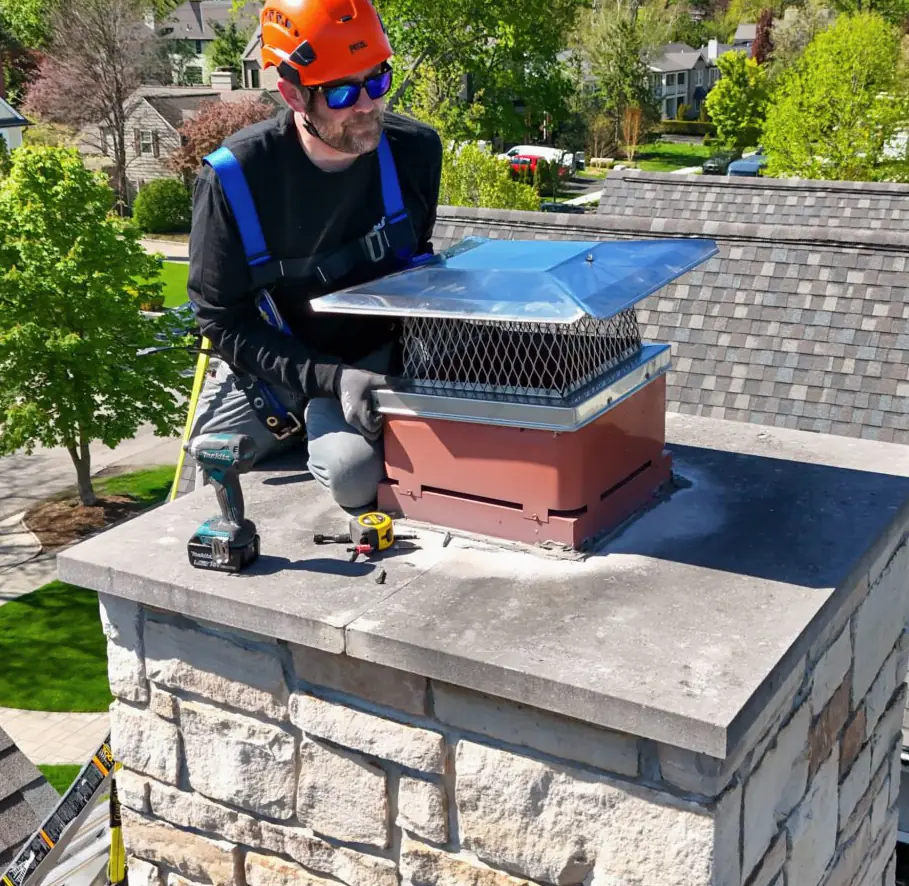
No single answer applies to every chimney: a cap may be required by the appliance instructions or local code, and it helps keep rain, animals, and debris out. Our chimney cap installation service can address a missing or damaged cap.
Need help now? (443) 659-7036
Are Chimney Caps Required for Every Chimney?
A chimney cap is not automatically required in every situation. Whether one is required depends on the chimney, the connected appliance instructions, and applicable local building rules, so check those requirements for your setup rather than relying on a general rule.
Even when a cap is not required, it can serve a practical purpose: a properly fitted cap helps keep rain, leaves, and animals from entering the flue. Its screen can also help contain embers, but it does not replace a sound chimney, a clear flue, or routine inspection.
What a Chimney Cap Keeps Out
Rain entering an uncapped flue can contribute to moisture problems inside the chimney. Water staining, damp odors, or debris around the fireplace may be signs to investigate, though they do not prove that a missing cap is the only cause.
Birds and other animals may enter an open flue and bring nesting material with them. A cap with a screen can help block animals and larger debris while allowing smoke to vent. The screen must remain clear; a blocked screen can interfere with exhaust flow.
A chimney cap is different from a chimney crown or chase cover. The cap sits at the flue opening. A crown protects the top of a masonry chimney, while a chase cover closes the top of a framed chimney chase. A cap will not fix cracks or a leaking chase cover.
Which Chimney Top Needs Attention?
Open flue with no cap
Consider a cap when the flue is exposed to rain, animals, or falling debris. First make sure the flue opening and chimney top are suitable for a cap; an uncovered, damaged, or unusual-looking top needs an on-site assessment.
Cap present but loose, bent, or corroded
A cap that has shifted or deteriorated may no longer protect the opening securely. Have its fit and condition checked rather than trying to fasten it from the roof.
Water marks or damage around the top
A new cap alone may not solve water entry when the crown, masonry, flashing, or chase cover is damaged. The source of the leak needs to be identified before choosing a repair.
Animal sounds or nesting material
Do not reach into the flue or try to pull out an animal or nest. Keep the fireplace or appliance off and arrange professional attention so the obstruction and cap opening can be checked safely.
Need help now? (443) 659-7036
How to Check Your Chimney Cap Without Climbing
Keep this check at ground level and indoors. A roof inspection is not a safe owner-level task, and a view from the ground cannot confirm that a cap is firmly attached or that the flue is clear.
- Identify the chimney — From the ground, locate the chimney serving the fireplace, wood stove, or other appliance. Note which appliance connects to it so you can share that detail when arranging service.
- Use binoculars from the ground — Look for a visible cap over the flue opening and note whether it appears tilted, damaged, or absent. Do not climb a ladder or step onto the roof to get a closer look.
- Check for signs of water indoors — With the fireplace cold, use a flashlight to look for water staining or damp debris around the firebox. Check whether the marks are new or recurring, and do not put your hand or a tool into the flue.
- Notice animal activity — Listen for movement or calls in the chimney and look for nesting material only from a safe place at the fireplace opening. If you suspect an animal or blockage, do not light a fire.
- Note smoke or draft trouble — Record whether smoke has entered the room or the fireplace has been difficult to use. These symptoms can have causes other than a cap, so do not treat cap replacement as a complete diagnosis.
- Gather the details — Write down the appliance type, visible cap condition, water signs, and any animal or smoke concerns. Photos taken from the ground can help describe what you see without putting you on the roof.
- Arrange an inspection or installation — Share those details with a chimney professional and ask whether the cap, flue opening, and surrounding chimney top need inspection. A chimney sweep can assess the flue as well as the visible cap; see our chimney sweep in Baltimore service information.
How a Cap Differs From a Crown or Chase Cover
These parts protect different areas, so matching the repair to the visible problem matters. Replacing a cap will not correct damage elsewhere on the chimney.
- Chimney cap — Covers the flue opening. It is the relevant option when the opening lacks a cap or the existing cap is damaged, provided the flue and mounting surface are suitable.
- Chimney crown — Forms the top surface of a masonry chimney around the flue. Cracks or deterioration in the crown call for crown assessment and repair, not just a new cap.
- Chase cover — Covers the top of a framed chimney chase. If water is entering around a damaged or poorly fitting cover, replacing the cap alone may leave the leak unresolved.
- Flue or liner — Carries exhaust through the chimney. A cap does not repair a damaged liner or clear a blocked flue; those conditions need their own evaluation.
When a Missing or Damaged Cap Needs a Chimney Sweep
Contact a chimney sweep when the cap is missing, loose, visibly damaged, or accompanied by water entry, animal activity, or trouble venting smoke. A professional can check whether the cap fits the flue and whether the crown, chase cover, or liner also needs attention.
Do not use the fireplace when you suspect an animal, nest, or other obstruction in the flue. A cap screen can also collect soot or debris over time, so persistent smoke or poor venting deserves a chimney check rather than a guess that the cap is the only issue.
Need help now? (443) 659-7036
What to Expect From Chimney Cap Installation
The appropriate cap depends on the flue opening and the condition of the chimney top. Installation starts at $250; the final scope depends on what the chimney needs. If you are comparing costs, see our guide to how much chimney cap installation costs.
When booking, describe the appliance, whether a cap is already present, and any water, animal, or smoke signs. Ask for the expected visit length for your particular job, since a straightforward cap installation and work that also involves a damaged crown or chase cover are different scopes. Same-day service is available.
How to Book a Chimney Cap Check
Have your address, appliance type, and ground-level observations ready when you arrange service. Mention possible animals or a blocked flue before using the fireplace, and share any photos you took safely from the ground.
For a missing or damaged cap, contact us to arrange chimney cap service. If the top shows signs of a leak or masonry damage, describe those symptoms too so the right chimney work can be considered.
Frequently asked questions
Can I use my fireplace if the chimney cap is missing?
A missing cap by itself does not tell you whether the flue is safe or clear. Do not use the fireplace if you suspect an animal, nest, obstruction, or smoke-venting problem; arrange a chimney check before lighting a fire.
Does a chimney cap stop every chimney leak?
No. A cap covers the flue opening, but water can also enter through a damaged crown, chase cover, flashing, or masonry. The source of the water needs to be identified before choosing a repair.
How much does chimney cap installation cost?
Chimney cap installation starts at $250. The work needed at the chimney top affects the scope, so mention any visible damage or water entry when you request service.
How long does a chimney cap installation visit take?
The visit length depends on roof access, the chimney top, and whether the existing crown or chase cover needs attention. Ask for an expected duration when booking and describe any additional damage you can see from the ground.
Arrange a Chimney Cap Check
Share what you see from the ground and contact us to arrange chimney cap service.