
What Is Creosote, and How Does It Form in a Chimney?
Creosote forms when smoke from burning wood cools in the chimney and its vapors condense on the flue walls. A cooler flue or smoky, incomplete burn can leave more residue, so a sweep can remove deposits before they build up further.
Need help now? (443) 659-7036
How Does Creosote Form Inside a Chimney?
A wood fire releases smoke that contains water vapor, gases, and unburned particles. As that smoke travels up the flue, it can cool; some of its vapors and particles then condense or stick to the inner chimney walls, forming creosote. The process is more likely when combustion is incomplete or the flue stays cool.
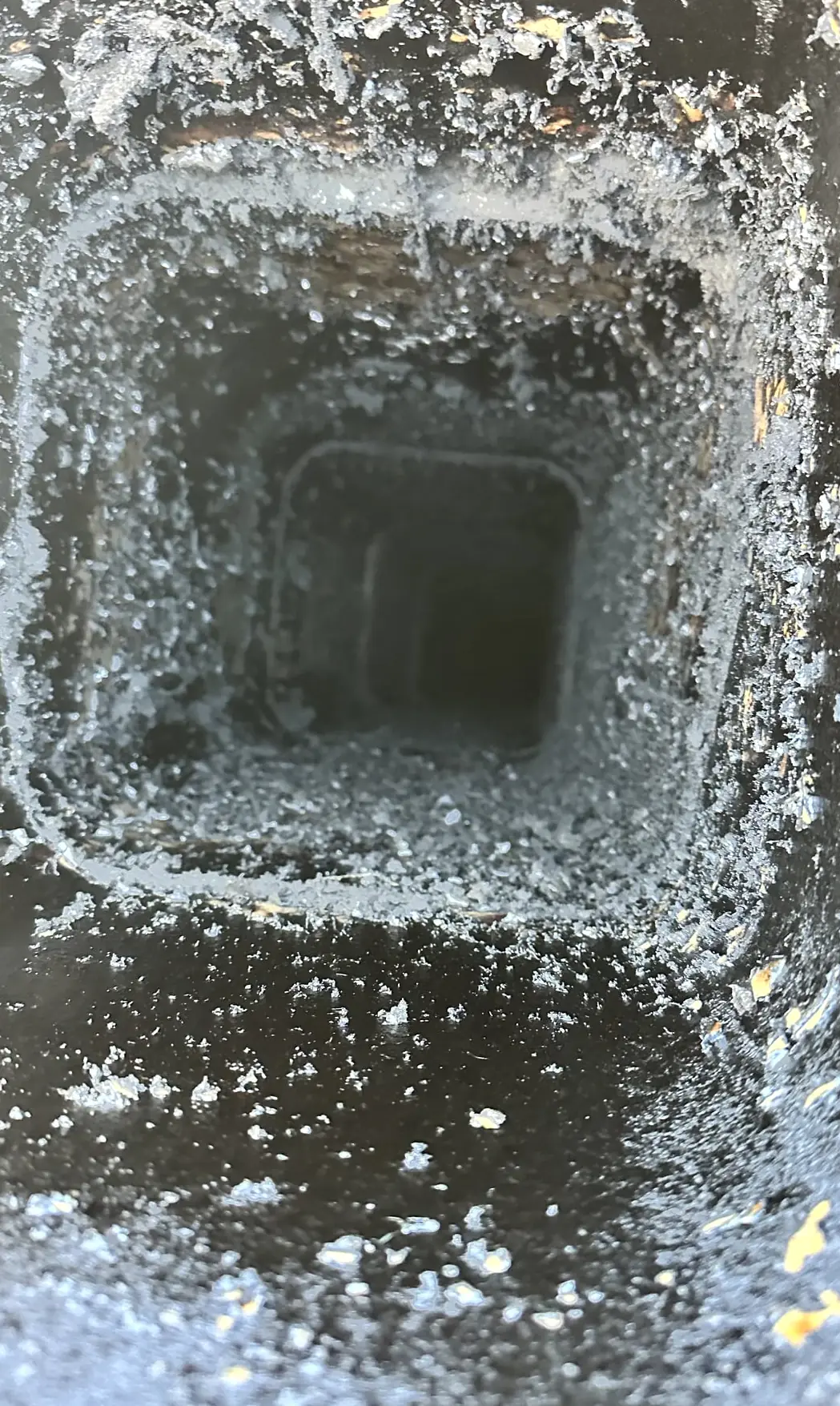
Creosote can begin as a light, dusty deposit and become darker, thicker, or more tar-like as layers accumulate. The Chimney Safety Institute of America’s explanation of creosote formation describes why deposits can become a fire hazard. The residue is not simply soot; what is different about creosote and soot depends on how the material forms and what it looks like.
What Makes Creosote Build Up Faster?
Several conditions can make wood smoke cool or burn less completely before it exits the chimney. These are useful clues when you describe the fireplace to a sweep.
Damp firewood
Wet wood uses heat to evaporate moisture, leaving less heat for efficient combustion and adding water vapor to the smoke. The EPA recommends seasoning firewood for at least six months; its wood-burning guidance explains this and other ways to burn more cleanly.
A cool flue
Smoke loses heat as it rises through a cold or oversized passage, which can encourage condensation on the flue walls. Repeated fires that start slowly can leave more opportunity for residue to collect.
Restricted airflow
A partly closed damper during a fire, blocked passage, or poor draft can limit the air the fire needs. That can produce smokier combustion and allow more unburned material to travel upward.
Smoldering fires
A fire kept low by restricting its air supply may release more smoke instead of burning steadily. Do not try to burn away chimney deposits with an unusually hot fire; have a sweep assess the buildup.
What Signs Can Point to Creosote in the Flue?
You cannot reliably judge the full chimney from the firebox opening. Look for clues from a safe position, then leave a closer flue check and removal to a chimney professional.
- Black, flaky residue — Dark flakes or crust inside the firebox or visible flue area can be soot or creosote. Their appearance alone does not establish how much is farther up the chimney.
- Shiny or sticky deposits — A glossy, tar-like coating can indicate a more stubborn form of creosote. Do not scrape it or reach into the flue; the liner can be damaged and the residue may extend beyond reach.
- Smoke entering the room — Smoke spilling into the room can point to a draft problem, obstruction, or buildup, among other causes. Stop using the fireplace until a sweep can check the venting path.
- A strong smoky odor — A persistent smoke smell when the fireplace is cold can accompany deposits, but odor alone cannot identify the cause. Tell the sweep when you notice it and whether it changes with weather or appliance use.
Need help now? (443) 659-7036
What Can You Check Safely Before Creosote Removal?
Use these steps to gather useful information without climbing onto the roof or trying to clean inside the chimney. Do not light another fire if smoke has spilled into the room or you suspect heavy deposits.
- Let the fireplace cool — Wait until the fire and ashes are completely cold before looking into the firebox. Check that no embers remain; do not handle hot ash or put your hands into the flue.
- Record what fuel you burn — Note whether the appliance burns wood, pellets, or gas and how often you use it. Wood-burning flues are where the smoke-and-condensation process described above creates creosote.
- Look from the firebox — Use a flashlight to view the firebox and only the flue area visible from below. Note whether the residue looks dusty, flaky, or glossy, but do not push a tool upward to test it.
- Check your firewood — For a wood fire, use a moisture meter on a freshly split face if you have one, and note whether the wood is damp or recently cut. Properly seasoned wood reduces excess moisture in the fire.
- Observe the damper — With the fireplace cold, check that the damper moves and is not visibly obstructed from the firebox. During a fire, it must be open; never close it to make a smoky or slow-burning fire last longer.
- Note smoke and draft symptoms — Write down when smoke enters the room, whether the fireplace has trouble drawing smoke upward, and whether the odor persists after use. These details help a sweep distinguish buildup from other venting concerns.
- Arrange a professional check — Share what you observed and request creosote removal if deposits are the concern. Maryland Chimney Sweeps is open 24 hours a day, 7 days a week, and same-day service is available.
Which Creosote Removal Approach Fits the Deposit?
The deposit’s condition matters because loose soot and hardened, glazed creosote do not respond to the same approach. A sweep should assess the flue and select a removal method suited to the residue rather than relying on a homeowner’s visual estimate.
Loose, dry deposits
A chimney sweep can remove loose material with cleaning tools selected for the flue and appliance. This is the appropriate professional route for ordinary accumulated deposits; a household brush may not fit or clean the full passage.
Thick or glazed deposits
Hard, shiny buildup can need specialized removal methods. Aggressive scraping or improvised chemicals can harm the flue or leave residue behind, so let a chimney professional choose the method.
Damage or a continuing draft problem
Removal addresses deposits, not a cracked liner, damaged masonry, or an airflow fault. If a sweep identifies a separate defect, ask whether an inspection or chimney repair is needed before using the fireplace again.
When Should You Stop Using the Fireplace and Call a Sweep?
Stop burning wood if smoke enters the home, the flue appears obstructed, or you see a thick, glossy coating. More fires can add residue, and trying to burn deposits away can expose the chimney to unsafe heat. A chimney sweep can check the passage and determine whether creosote removal is the right service.
A professional assessment also matters when the visible opening looks clean but the appliance still drafts poorly: deposits and obstructions can sit higher in the flue. Request the creosote removal service and describe the fuel, symptoms, and any visible residue.
Need help now? (443) 659-7036
What Happens During a Creosote Removal Visit?
Creosote removal focuses on clearing deposits from the chimney passage; a sweep first needs to understand the appliance, fuel, and symptoms to assess the job. The deposit’s location and condition affect the work, so share what you observed when booking rather than trying to identify the full problem yourself.
To book, contact us or call (443) 659-7036 and request creosote removal. Maryland Chimney Sweeps serves Maryland from its Baltimore base, and you can also learn about a chimney sweep in Baltimore.
How Can You Reduce Creosote From Returning?
Burn dry, seasoned firewood and avoid keeping a wood fire smoldering by starving it of air. Keep the damper open while a fire burns, and stop using the fireplace if smoke spills into the room or the draft changes unexpectedly.
A clean flue does not prevent future buildup if the same burning conditions continue. For an estimate specific to the work, see how much creosote removal costs.
Frequently asked questions
Can I remove creosote from my chimney myself?
Do not climb onto the roof or scrape deposits from inside the flue yourself. Creosote can be difficult to remove, and unsuitable tools can damage a liner or leave deposits behind; have a chimney sweep assess and clean the passage.
Does every black deposit in a fireplace mean creosote?
No. Soot and creosote can both look dark, and the material at the firebox may not show what is higher in the flue. A sweep can inspect the chimney rather than relying on color alone.
Can creosote form in a gas fireplace chimney?
Creosote forms from smoke produced by burning wood, so the same process does not apply to a gas appliance. Gas fireplaces still need an appropriate venting check if you notice a draft problem, blockage, or unusual odor.
What should I tell a sweep when booking creosote removal?
Describe the appliance and fuel, how often you use it, and any smoke spill, odor, or visible deposits. Mention whether the residue looks flaky or glossy so the sweep knows what you observed before arriving.
Arrange Creosote Removal
Call (443) 659-7036 to request service. Maryland Chimney Sweeps is open 24/7, with same-day service available.