
Is It Safe to Use a Fireplace Without a Chimney Sweep?
No—don’t assume a fireplace is safe just because it looks clean; the flue can hold creosote, soot, blockage, or damage out of sight. Have the chimney inspected and swept when deposits require it before you burn again.
Need help now? (443) 659-7036
Is It Safe to Use a Fireplace Without a Chimney Sweep?
You should not use a fireplace until you know the chimney is in safe condition. A fire can leave soot and creosote inside the flue, while a blocked or damaged passage can keep smoke and combustion gases from venting properly. Those problems are not always visible from the hearth.
The Chimney Safety Institute of America (CSIA) explains that NFPA 211 calls for a chimney inspection at least once a year. An inspection checks the chimney’s condition; sweeping removes deposits when they need to come out. Read the CSIA homeowner guidance for its inspection and sweeping recommendations.
What Dirty Chimney Dangers Can Build Up Out of Sight?
The main dirty chimney dangers are fire, smoke entering the home, and damage that stays hidden until a chimney professional checks the flue. Creosote is a combustible deposit produced by wood fires; more can accumulate when smoke cools as it travels through the chimney.
- Creosote ignition — Creosote can catch fire inside the flue. A chimney fire can damage masonry or a factory-built chimney, even when the fireplace opening looks normal afterward.
- Restricted draft — Soot, debris, or an obstruction can narrow the path that smoke needs to travel. Smoke that spills into the room is a reason to stop burning and have the chimney checked.
- Hidden flue damage — A fire or deteriorated chimney material can leave cracks or other damage beyond what you can see from the firebox. Continued burning can expose the home to more risk.
- Animal or debris blockage — A nest or other obstruction near the chimney top can interfere with venting. Do not climb onto the roof to check it; leave the flue and cap assessment to a chimney sweep.
How Can You Tell Whether a Fireplace Chimney Needs Cleaning?
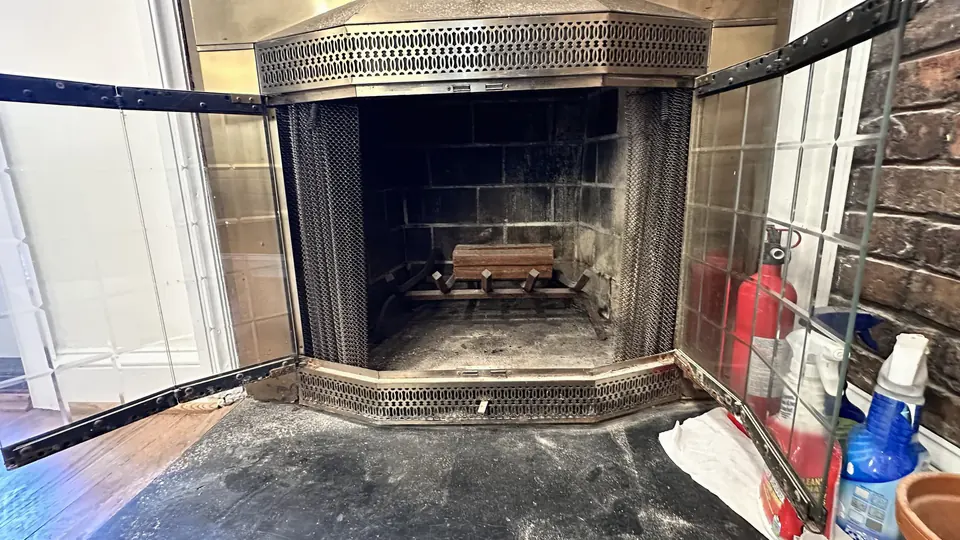
A glance into the fireplace cannot confirm that the full flue is clean. Look for signs from a safe position at the hearth, then arrange an inspection or sweep rather than trying to diagnose the chimney from below.
- Dark, flaky deposits — Soot or creosote visible around the firebox, damper, or accessible flue entrance points to deposits that need professional assessment.
- Shiny or tar-like residue — Glazed-looking creosote is harder to remove than loose soot. CSIA identifies creosote buildup of 1/8 inch or more as a threshold for sweeping.
- Smoke that enters the room — Smoke spilling into the living space can indicate a draft problem or obstruction. Stop using the fireplace until a sweep checks the venting path.
- A change after an event — A chimney fire, significant weather event, appliance change, or relining can call for a more detailed inspection—not just routine sweeping.
Need help now? (443) 659-7036
What Should You Check Before Lighting Another Fire?
These owner-level checks can help you decide what to do next, but they do not replace an inspection inside the chimney. Keep both feet on the floor and do not reach into the flue or climb onto the roof.
- Let the fireplace cool completely — Wait until there are no live embers or heat before looking inside. Check that the hearth and firebox are cool to the touch without handling ash that may still be hot.
- Use a flashlight from the hearth — Shine a flashlight toward the damper and the visible flue opening. Look for deposits, fallen debris, or a nest; do not insert a tool or your hand to test the passage.
- Look at the damper — From a safe position, check whether the damper moves and appears to open fully. If it sticks, is damaged, or you cannot tell whether it is open, do not light a fire.
- Check for residue — Notice whether deposits look loose and sooty or shiny and tar-like. Do not scrape them: the appearance can guide your call, but removal methods depend on the deposit and chimney condition.
- Check for signs of smoke trouble — Recall whether smoke has entered the room during earlier fires or left a new odor or residue. Treat smoke spillage as a reason to stop using the fireplace and arrange a professional check.
- Consider recent changes — Note any chimney fire, major weather event, appliance change, or relining since the last inspection. These events can change what level of inspection is appropriate.
- Decide whether to pause or book service — If you see deposits, damage, blockage, or an uncertain damper—or do not know the chimney’s condition—leave the fireplace unused and book a chimney sweep or inspection.
Should You Book a Sweep, an Inspection, or Both?
Sweeping and inspection address different needs. A chimney may need one or both, depending on its deposits, condition, and recent use.
Choose a sweep when deposits need removal
A chimney sweep removes soot and creosote buildup from the chimney. CSIA’s 1/8-inch threshold is a practical reason to have deposits swept rather than leaving them in place.
Choose an inspection when condition is the concern
An inspection evaluates the chimney and venting system for damage, blockage, and other unsafe conditions. It is the useful next step when you cannot tell why smoke spills into the room or whether the flue is intact.
Ask about a more detailed inspection after a change or event
CSIA’s Level 2 guidance recommends a Level 2 inspection for situations such as an appliance change, home sale, relining, or a fire or weather event; this inspection includes a video scan. Review the CSIA Level 2 inspection procedure for those triggers.
What Can Go Wrong If You Keep Using a Dirty Chimney?
Burning through a dirty or obstructed chimney can allow creosote to ignite or smoke to spill indoors. A chimney fire can also damage the chimney itself, so a fireplace that still lights is not proof that the flue is safe. CSIA describes how creosote forms and how chimney fires can harm masonry and factory-built chimneys in its guide to preventing chimney fires.
Do not try to burn deposits away with a hotter fire or scrape the flue yourself. Stop using the fireplace if you see smoke coming into the room, suspect a blockage, or notice damage; have a chimney sweep assess the cause before the next fire.
Need help now? (443) 659-7036
When Should You Stop Using the Fireplace and Book a Sweep?
Pause use when the chimney has not been inspected, deposits are visible, the damper does not work properly, smoke enters the room, or a fire or weather event may have affected the flue. A routine chimney sweep can remove deposits; a chimney inspection can check the system’s condition, and a more detailed inspection may be needed after certain changes or events.
Maryland Chimney Sweeps provides chimney sweep service at the home, with same-day service available and the business open 24 hours a day, 7 days a week. To book a visit, call (443) 659-7036 or use our contact page. For related inspection needs, see our chimney inspection service.
Frequently asked questions
What happens if you never clean your chimney?
Soot and creosote can accumulate, and a blockage or damage may remain hidden in the flue. Creosote can ignite, so arrange an inspection and have deposits swept when needed rather than continuing to burn.
How do I know my chimney needs cleaning?
Visible soot, glazed or tar-like creosote, smoke spilling into the room, or debris near the flue opening are reasons to book a professional assessment. A qualified visual check from the hearth cannot show the full condition of the chimney.
Can I use the fireplace if the chimney looks clean?
A clean-looking firebox does not prove that the flue is clear or undamaged. Follow the annual inspection recommendation and pause use if you do not know the chimney’s condition.
Should I use the fireplace after smoke comes into the room?
No; stop using it until a chimney sweep checks the draft and venting path. Smoke spillage can point to a blockage or another problem that needs to be addressed before another fire.
Get the Chimney Checked Before You Burn
Call (443) 659-7036 to book chimney sweep service at your home.