
Will Homeowners Insurance Pay for Chimney Repair?
Homeowners insurance may pay for chimney repair when damage comes from a sudden event your policy covers, but it generally excludes wear, age, and neglected maintenance. Check your policy and report the cause to your insurer before authorizing non-emergency work.
Need help now? (443) 659-7036
Will Homeowners Insurance Pay for Chimney Repair After a Covered Event?
Coverage depends on the cause of the damage and the terms of your policy. Homeowners insurance commonly covers sudden, accidental damage from a covered event, such as a lightning strike or an object falling on the chimney. Your policy may exclude damage that develops gradually through age, weather exposure, poor maintenance, or an unrepaired leak.
A crack or leak alone does not establish whether a claim qualifies. The insurer needs to know what caused it, when it happened, and whether the policy covers that cause. Review the sections on covered perils, exclusions, deductibles, and claim deadlines, then ask your insurer how to document the loss before permanent repairs start.
Which Chimney Damage May Qualify for a Claim?
Compare the likely cause with your policy rather than judging coverage by the size of the visible damage.
Sudden impact or storm damage
A falling limb, lightning, or another sudden event may fit a covered-peril provision. Photograph the visible damage from a safe place and report the event date and circumstances to your insurer.
Gradual water damage
A leak that has continued over time may be treated differently from damage caused by one specific storm. Note when you first saw water, where it appears inside, and whether the flashing, crown, or masonry shows visible changes.
Age, wear, or neglected maintenance
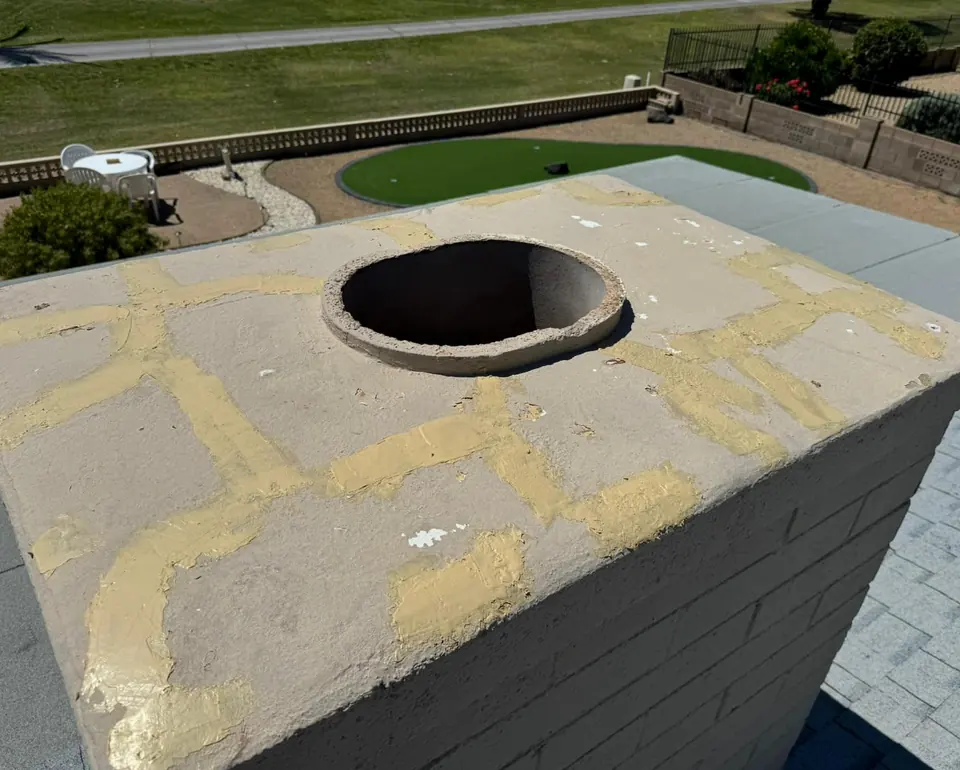
Deteriorated mortar, a worn chimney crown, or damage left unrepaired may fall under policy exclusions. Ask the insurer to identify the exact policy language it applies before deciding how to proceed.
How to Document Chimney Damage Before Repairs
Use a phone camera, a notebook, and your policy documents to create a clear record. Stay on the ground; do not climb onto the roof or remove chimney parts to collect evidence.
- Stop using the fireplace if damage affects safe operation — Pause use if you see a damaged flue, loose masonry, or debris inside the firebox. Check that the appliance is off and keep people away from the affected area until it has been assessed.
- Photograph the visible condition — Take wide and close-up photos from the ground or inside the home, including the chimney, ceiling stains, and debris. Check that the images show where the damage is located and are clear enough to compare later.
- Write down the timeline — Record when you noticed the problem, the weather or event around that time, and any change since then. Check your notes against dated photos, messages, or other records you already have.
- Protect the area without attempting roof work — Move belongings away from a leak and use a container to catch dripping water indoors. Check whether water continues to enter, but do not cover or climb onto the chimney yourself.
- Contact your insurer before permanent repairs — Ask how to open a claim, whether an adjuster needs to see the damage, and what documentation to keep. Write down the claim number and check that you understand the insurer’s instructions before work begins.
- Arrange a chimney assessment — A chimney professional can inspect the affected area and identify related damage, such as problems with the crown, flashing, masonry, or flue. Check that the written findings describe the visible damage and the recommended repair scope.
- Compare the repair scope with the claim decision — Review the estimate and inspection findings alongside the insurer’s written decision. Check that each repair item has a clear description, and ask the insurer how to submit additional findings before authorizing non-emergency work.
Need help now? (443) 659-7036
What to Give the Insurer for a Chimney Repair Claim
Keep the claim record together so you can answer questions without relying on memory. Send copies when requested and keep your originals.
- Photos and dates — Include images of the chimney and any interior effects, with the date you took them and the date you first noticed the issue.
- A short event description — Write what happened, what you observed, and whether the damage changed over time. Separate what you saw from what you think caused it.
- Inspection findings and repair estimate — Share the written description of affected components and proposed work. Ask the insurer whether it wants additional documentation or an inspection before repairs proceed.
- Claim instructions and records — Keep the claim number, insurer correspondence, and any receipts related to temporary steps or approved work. Check with the insurer about which expenses it wants documented.
Which Chimney Repair Scope Matches the Damage?
A repair should address the damaged component and the cause the inspection identifies, not just cover a visible symptom. The written scope gives you and the insurer a specific basis for comparing findings.
Masonry and crown work
Cracked or loose brick and mortar may call for masonry repair; a damaged crown may need separate attention. Check that the scope names the affected area and explains how the repair addresses the observed damage.
Flashing and leak repair
Water entering around the roof-to-chimney connection points to a different repair area than water entering through the crown or masonry. Compare the reported entry point with the proposed flashing or leak work.
Flue or liner repair
Damage inside the passage that carries smoke and gases requires evaluation of the flue or liner, not only the exterior brick. Check that the findings identify the affected section and whether the appliance should remain out of use until repaired.
What to Do If the Insurer Denies Chimney Repair Coverage
Ask for the denial and the specific policy wording in writing. Compare that explanation with your photos, timeline, inspection findings, and repair estimate; if the report identifies a cause the insurer did not consider, ask how to submit it for review.
A denied claim does not determine whether the chimney needs repair. Separate the repair decision from the insurance decision: address safety concerns promptly, keep records of the condition, and review the policy’s appeal or complaint process. For a cost discussion, see what is the average cost to repair a chimney?
Need help now? (443) 659-7036
How to Book Chimney Repair While a Claim Is Open
Before booking, ask your insurer whether it needs to inspect the chimney first. When you contact us, describe the event, the visible damage, and any claim instructions you have; we come to the home to assess chimney repair needs. You can also review our chimney repair service or chimney sweep in Baltimore information.
The time on site depends on whether the appointment covers an assessment or completed repair and on the scope of the damage. Ask when booking whether the visit is for assessment, repair, or both, since some repairs require a separate visit. Same-day service is available, and we are open 24 hours a day, 7 days a week. To arrange a home visit, contact us with the chimney location and the damage you observed.
Frequently asked questions
Will homeowners insurance pay for a chimney leak?
It depends on what caused the leak and what your policy covers. A sudden covered event may be treated differently from water entry caused by gradual deterioration or maintenance issues, so document when you noticed it and ask your insurer about the claim process.
Should I have a chimney sweep inspect the damage before the adjuster visits?
Ask your insurer whether it wants to inspect the chimney before repair work begins. You can arrange a professional assessment to document the affected components, but keep the damage visible until you know whether the insurer needs to see it.
Can I use my fireplace while a chimney repair claim is open?
Do not use it if the damage may affect the flue, chimney structure, or safe venting. Have the affected parts assessed before using the fireplace again, and follow any instructions from your insurer or chimney professional.
What if the insurer’s estimate does not include all the chimney damage?
Compare the estimate with the inspection findings and ask the insurer how to submit additional documentation. Provide clear photos and a written description of any affected components that the estimate leaves out.
Get Your Chimney Damage Assessed
Share what happened and what you can see, then contact us to arrange a home visit.