
Who Do You Call for Chimney Repairs Near Me?
Maryland Chimney Sweeps handles chimney inspections and repairs throughout Maryland.
Need help now? (443) 659-7036
Who to Call for Chimney Repairs Near Me in Maryland
Call a chimney professional when you see damaged brick, loose mortar, a leak near the chimney, a damaged cap, or smoke that does not vent properly. The right provider should be able to inspect the chimney and match the repair to the part that has failed, rather than treating a visible symptom without checking its source.
Maryland Chimney Sweeps provides chimney repair and inspection services across Maryland. Owner Darren Whitaker has 22 years of experience with chimneys and fireplaces. Our chimney repair service includes repairs such as masonry, crown, flashing, liner, damper, and leak work.
Signs Your Chimney Needs a Repair Specialist
A surface symptom can point to damage in a different part of the chimney. Note what you see and where it appears; that information helps a sweep focus the inspection.
- Water stains or dampness — Stains on the ceiling or wall near the chimney, damp masonry, or water inside the firebox can indicate a leak. The source may involve the flashing, crown, cap, or another part of the chimney.
- Cracked brick or missing mortar — Gaps, loose bricks, or mortar that flakes away need an assessment before more material comes loose. Point out whether the damage is on the exterior chimney, around the firebox, or both.
- Smoke or a change in draft — Smoke entering the room or a fireplace that behaves differently calls for an inspection before you use it again. A blocked or damaged passage, damper problem, or other issue may affect how smoke moves.
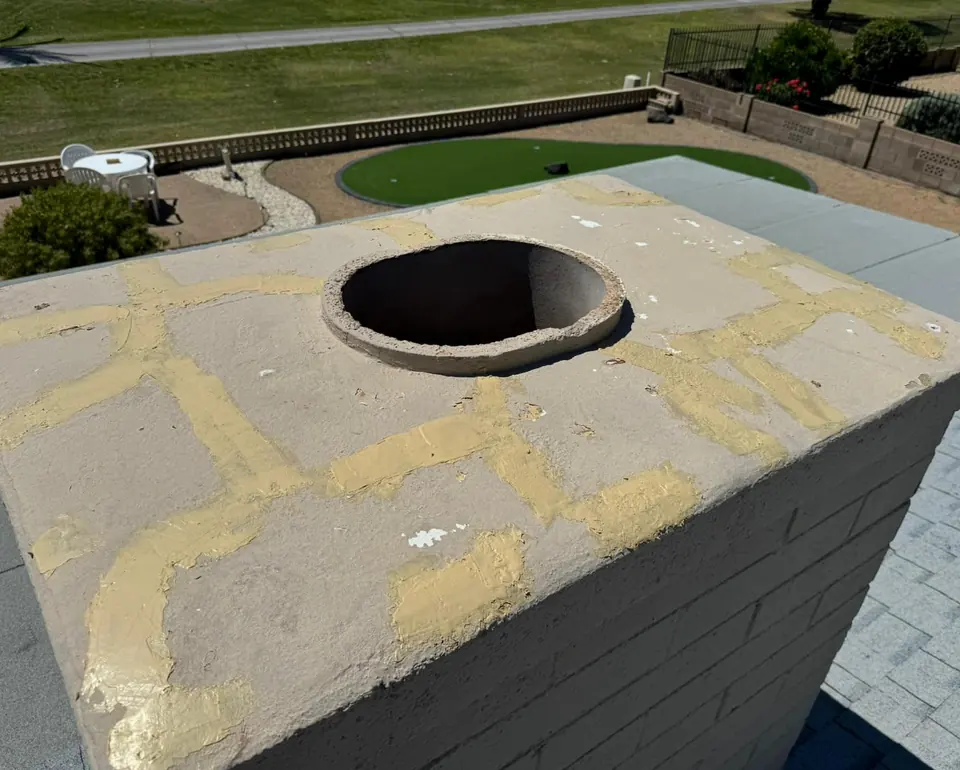
- Visible damage at the top of the chimney — A missing cap, broken crown, or loose metal cover can leave parts of the chimney exposed to water and debris. A chimney sweep can check the top and determine whether a cap, crown, or chase cover repair fits.
- Damage after a major event — After a chimney fire, severe weather, or a change to the appliance connected to the chimney, arrange an inspection before using the system. Those events can affect hidden areas that are not visible from the room.
Which Chimney Professional or Service Fits the Problem?
Choose the service based on what is damaged, not only on the symptom you can see.
Inspection for an unknown or hidden problem
Choose a chimney inspection when you cannot identify the source, when the chimney has not been checked after an event, or when you notice a change in fireplace operation. An inspection assesses the condition before repair work is selected.
Cleaning for soot or creosote buildup
Chimney cleaning and creosote removal address deposits inside the flue; they do not repair cracked masonry, a leaking flashing, or a damaged liner. Ask for an assessment if you see structural damage as well as buildup.
Targeted repair for a known damaged part
A chimney cap, crown, flashing, damper, liner, or masonry repair addresses a particular component. A sweep should check nearby areas too, so a repair does not overlook a related source of water or venting trouble.
Larger repair when damage is extensive
A chimney rebuild or broader masonry repair may be appropriate when the damage is not limited to one small area. The inspection findings help establish the scope before work begins.
Need help now? (443) 659-7036
Steps to Take Before and During a Chimney Repair
These owner-level steps help you describe the issue clearly and check that the repair addresses the relevant parts. Do not climb onto the roof or take apart the flue to investigate.
- Stop using the fireplace when something changes — If smoke spills into the room, a part looks loose, or water is entering the fireplace, pause use until the chimney is assessed. Check that the appliance is off and note what happened just before the change.
- Record the symptom and location — Write down whether you noticed smoke, a leak, loose mortar, or a damaged cap, and where you saw it. Check whether the issue appeared after rain, strong weather, or a change to the connected appliance.
- Take photos from a safe place — Photograph visible stains or exterior damage from the ground or indoors. Check that the pictures show the affected area clearly; do not use a ladder or step onto the roof.
- Share the chimney and appliance details — When booking, describe whether the chimney is masonry or metal if you know, what appliance it serves, and any recent changes. If you are unsure, say so rather than guessing at the damaged part.
- Ask what the inspection will cover — Confirm that the sweep will assess the area related to the symptom, such as the cap, crown, flashing, liner, damper, or masonry. Ask whether the situation calls for a more detailed inspection, including a video scan.
- Review the finding before repair work — Ask which component is damaged and how the proposed repair addresses it. Check that the description matches the observed problem and identifies any related work needed to correct the source.
- Check the completed work and next steps — Before the visit ends, ask what was repaired and whether any areas still need attention. Keep the repair information with your home records and follow the sweep’s instructions about when to use the fireplace again.
When a Chimney Repair Needs a More Detailed Inspection
Some damage is hidden inside the flue or behind visible masonry. A Level 2 inspection is recommended after a change to the appliance, a sale or transfer of the property, relining, or a fire or weather event; the CSIA procedure calls for a video scan as part of that inspection. Read the CSIA Level 2 inspection procedure for the full criteria.
Tell the sweep about any appliance change, chimney event, or recent lining work when you book.
How to Avoid Treating the Symptom Instead of the Chimney Problem
A water stain does not identify the exact leak source, and patching the visible spot alone may leave the damaged chimney component untouched. Ask the sweep to trace the problem to the relevant part, such as flashing, the crown, or a cap, and explain what the inspection found.
The wrong repair can also leave a venting or structural issue unresolved. Do not use a fireplace that is smoking into the room or has visible damage until it has been assessed; avoid trying to seal cracks or remove deposits yourself. For another perspective on repair pricing and scope, see what is the average cost to repair a chimney?
Need help now? (443) 659-7036
What to Share When Booking Chimney Repair
Call Maryland Chimney Sweeps at (443) 659-7036 or use the contact page to book. Describe the symptom, where you noticed it, whether the fireplace is wood-burning or gas, and any recent chimney or appliance work. You can also ask whether the visit is expected to involve an inspection, cleaning, or a specific repair.
There is no single visit length for every chimney repair: inspecting a chimney, replacing a cap, and repairing masonry involve different tasks. Ask for an expected duration when you book, based on the problem you describe and the work the visit needs to cover. The repair scope and inspection findings determine what happens next.
Frequently asked questions
What does a chimney repair visit include?
The visit should assess the reported problem and the chimney parts related to it, then identify the repair needed. Depending on the finding, the work may involve the liner, cap, crown, flashing, damper, masonry, or another listed chimney repair.
How do I know whether I need chimney cleaning or chimney repair?
Cleaning removes soot or creosote deposits; repair addresses damaged or malfunctioning parts such as masonry, a liner, or flashing. If you see damage or the fireplace has started smoking differently, ask for an inspection rather than assuming cleaning will fix it.
Can a chimney repair specialist inspect damage after a fire or storm?
Yes. A fire or weather event can affect areas that are difficult to see from inside the home, so report the event when booking and ask about a Level 2 inspection. That inspection includes a video scan under the CSIA procedure.
How long will my chimney repair appointment take?
The length depends on whether the visit involves an inspection, cleaning, or repair, and on the condition of the chimney.
Book a Chimney Repair Visit
Call Maryland Chimney Sweeps at (443) 659-7036 or use our contact page to arrange an inspection or repair.